🛞 What Is Four-Wheel Drive in Cars?
Benefits, Types, and When You Really Need It
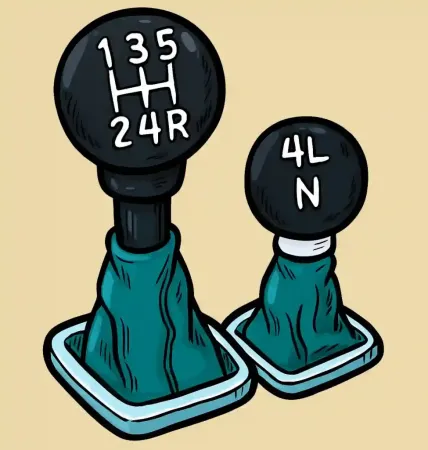
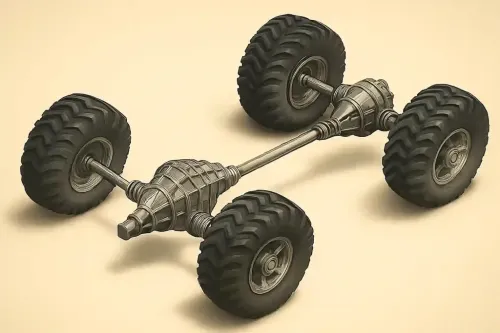
Four-wheel drive, also known as 4WD (Four-Wheel Drive) or AWD (All-Wheel Drive), is a system that allows all four wheels of a vehicle to receive engine power. This improves traction, stability, and performance in challenging conditions such as mud, snow, sand, or uneven terrain.
⚙️ How Does It Work?
In a conventional car with two-wheel drive (either front or rear), only two wheels receive power. In contrast, a vehicle with four-wheel drive operates differently:
-
4WD (Four-Wheel Drive):
- The system can be manually or automatically engaged or disengaged.
- Ideal for off-road terrain, as it distributes power rigidly between axles.
- Example: Toyota Hilux, Jeep Wrangler.
-
AWD (All-Wheel Drive):
- Always active.
- Uses smart differentials to distribute power as needed.
- More common in urban SUVs and crossovers.
- Example: Subaru Forester, Audi Quattro.
🧠 Key Differences Between AWD and 4WD
The main difference between AWD and 4WD lies in how and when the four-wheel traction is activated. AWD is always on, automatically distributing power between wheels based on road conditions—making it ideal for city driving, wet roads, or low-traction surfaces. On the other hand, 4WD can be manually engaged or triggered by sensors, and is designed for extreme terrain like mud, sand, or rocky paths.
Mechanically, AWD systems often include advanced electronics and smart differentials, making them more complex but also more refined. 4WD systems rely on a more rugged and direct mechanical setup, built to withstand demanding conditions.
In terms of fuel consumption, AWD vehicles tend to be more efficient than 4WD ones, though both consume more fuel than two-wheel drive systems. 4WD, built for brute force and maximum traction, typically has higher fuel usage.
✅ Advantages of Four-Wheel Drive
- Increased safety in low-traction conditions
- Better control during cornering and acceleration
- Off-road capability for outdoor adventures
- Smart torque distribution (in modern AWD systems)
⚠️ When Is It Really Useful?
Four-wheel drive isn’t necessary for every driver. It’s especially useful if:
- You live in areas with heavy rain, mud, or unpaved roads
- You engage in outdoor activities that require access to rough terrain
- You want greater stability on roads under changing conditions
🧰 Maintenance and Considerations
- Requires more maintenance than a two-wheel drive system
- Components like differentials, transfer cases, and sensors should be checked regularly
- Fuel consumption is generally higher, although modern systems have improved efficiency
🏁 Conclusion
Four-wheel drive is a marvel of automotive engineering that combines safety, performance, and versatility. Whether you're driving through the city or venturing into tough terrain, understanding how this system works helps you make more informed decisions when choosing your next vehicle.