🚗 The Car Transmission
The Heart of Automotive Movement
The transmission is one of the most essential components of any vehicle. Although it often goes unnoticed by the average driver, its function is vital for the engine to efficiently transfer its power to the wheels. In this article, we’ll explore what the transmission is, how it works, the types that exist, and why its maintenance is important.
⚙️ What Is the Transmission?
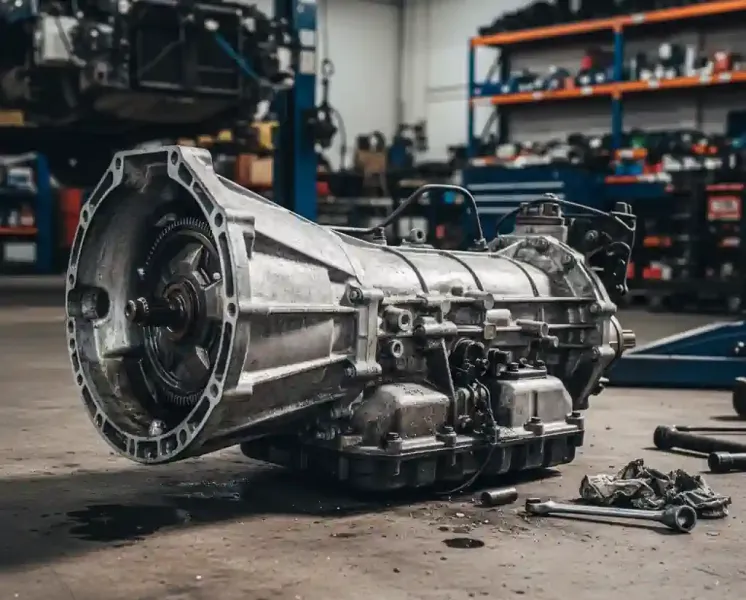
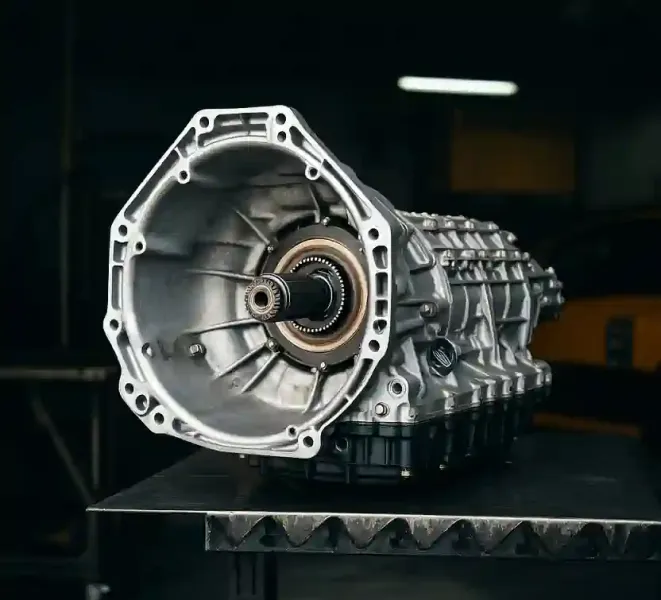
The transmission is the mechanical system that connects the engine to the vehicle’s wheels. Its main function is to adapt the engine’s power to driving conditions, allowing the car to accelerate, decelerate, and maintain a constant speed without overworking the engine.
🔄 How Does It Work?
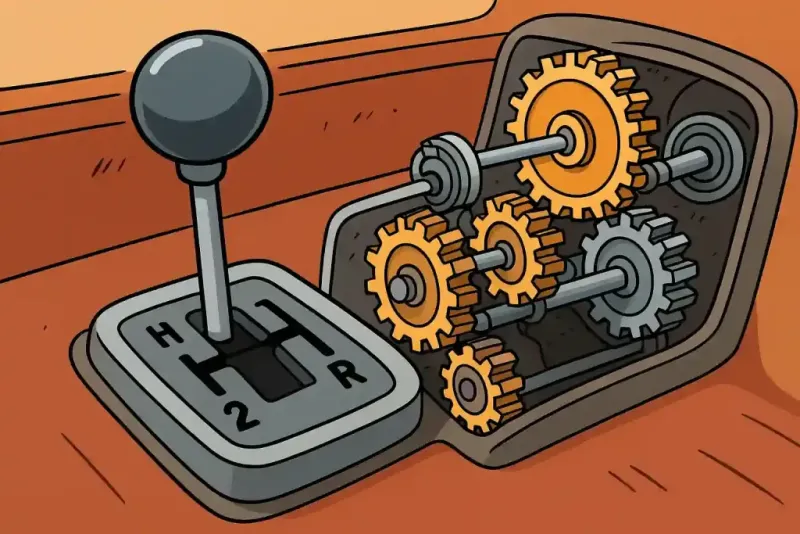
The engine generates energy in the form of rotation, but this energy isn’t always suitable for directly moving the vehicle. The transmission regulates this energy through gears that modify the relationship between engine speed and wheel speed. This allows the vehicle to:
- Start without stalling the engine
- Climb hills with greater force
- Save fuel at constant speeds
🛠️ Types of Transmission
In the automotive world, there are several types of transmission, each designed to offer a distinct driving experience and adapt to different needs.
Manual transmission is the most traditional. In it, the driver has full control over gear changes using a gear stick and clutch pedal. This type is appreciated by those who seek a more direct connection with the vehicle and greater fuel efficiency, although it requires more skill and attention.
Automatic transmission, on the other hand, shifts gears on its own based on speed and driving conditions. It’s ideal for those who prioritize comfort, especially in urban environments with constant traffic. Although it typically consumes more fuel than manual, technological advances have narrowed that gap.
CVT (Continuously Variable Transmission) represents an innovation in design. Instead of fixed gears, it uses a pulley system that allows smooth and continuous transitions between speeds. This results in smoother acceleration and notable energy efficiency, though some drivers miss the traditional gear-shifting feel.
Finally, dual-clutch transmission (DCT) combines the best of manual and automatic systems. It uses two clutches to shift gears quickly and precisely, making it popular in sports and high-performance vehicles. It offers nearly instant gear changes without power interruptions, delivering a dynamic and exciting driving experience.
Each transmission type has its advantages, and the choice depends on driving style, environment, and personal preferences.
🔧 Maintenance and Care
A poorly maintained transmission can cause serious problems such as power loss, difficulty shifting gears, or even irreparable damage. To avoid this:
- Change the transmission fluid according to the manufacturer’s recommendations
- Avoid sudden acceleration and unnecessary braking
- Inspect the system if you notice strange noises or irregular gear changes
🏁 Conclusion
The transmission is much more than a set of gears—it’s the system that allows the engine and wheels to work in harmony. Understanding how it works and taking proper care of it not only improves vehicle performance but also extends its lifespan. So next time you drive, remember that beneath your feet lies a masterpiece of engineering working to get you to your destination.