Pistons
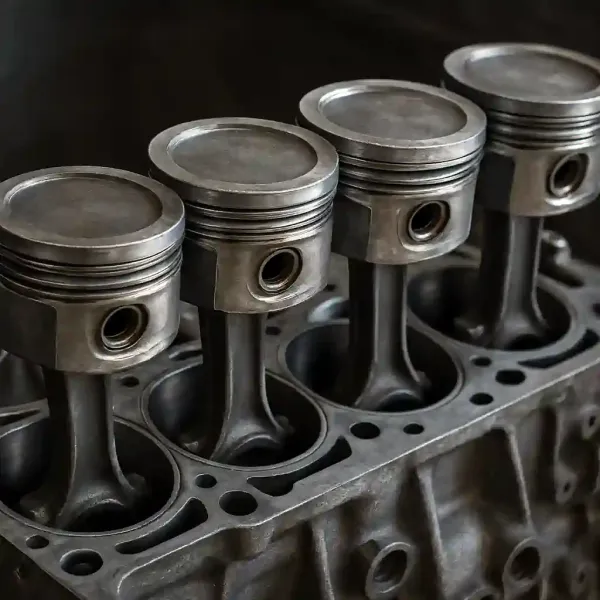
Pistons are among the most important components of a car’s internal combustion engine. Although they are relatively small parts, their role is essential in converting the energy generated by fuel combustion into mechanical motion that powers the vehicle.
In this article, we’ll explore what pistons are, how they work, the different types available, common issues, and maintenance tips to extend their lifespan.
1. What Is a Piston and What Does It Do?
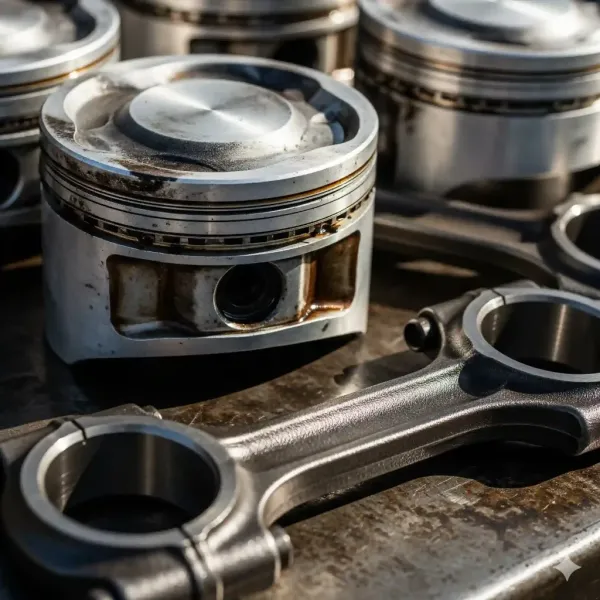
A piston is a cylindrical component that moves up and down inside the engine’s cylinders. It is connected to the connecting rod, which in turn links to the crankshaft.
Its main functions are:
- Receiving the force generated by the explosion of the air-fuel mixture inside the combustion chamber.
- Transmitting that mechanical energy to the crankshaft.
- Contributing to the intake, compression, combustion, and exhaust cycle.
In other words, pistons transform combustion energy into linear motion, which is then converted into rotational motion to turn the vehicle’s wheels.
2. Types of Pistons
There are several types of pistons, each designed according to the engine’s characteristics and requirements:
a) By Material
- Aluminum pistons → Lighter and common in most modern cars, allowing high RPMs.
- Steel pistons → More durable, used in high-performance engines or heavy-duty vehicles.
b) By Design
- Flat-top pistons → Ideal for engines focused on fuel efficiency.
- Domed pistons → Enhance compression in high-performance engines.
- Concave pistons → Improve air-fuel mixing and reduce the risk of detonation.
3. Common Piston Failures
Over time, pistons may develop issues due to natural wear, lack of maintenance, or improper engine use. Common failures include:
a) Worn piston rings
- Causes loss of compression.
- Increases oil consumption.
- Reduces engine power.
b) Scored or burned pistons
- Occurs due to excessive heat or poor lubrication.
- May cause metallic noises and performance loss.
c) Cracks or fractures
- Usually caused by detonation, overheating, or over-revving.
- In severe cases, can damage the entire engine block.
4. Tips for Piston Care
Preventive maintenance is key to extending piston life and avoiding costly repairs. Here are some recommendations:
- Maintain proper oil levels → Lubrication is essential to prevent excessive friction.
- Use quality oil and fuel → Helps reduce residue and prevents carbon buildup.
- Avoid stressing the engine when cold → Wait until it reaches operating temperature before demanding power.
- Perform regular maintenance → Check ring condition, compression, and fuel injection.
- Prevent overheating → Monitor the cooling system and replace coolant as recommended.
5. Conclusion
Pistons are the heart of the engine, and their proper function is vital for vehicle performance. Understanding how they work, what types exist, and how to care for them can make the difference between an efficient engine and one plagued by costly problems.
If you notice excessive smoke, power loss, or strange noises from your engine, the pistons or their rings may be worn. In such cases, it’s best to visit a specialized workshop for a thorough inspection.