🛠️ Engine Air Filter
The engine air filter is one of those components that often goes unnoticed, yet plays a crucial role in your vehicle’s performance and longevity. Without it, the engine would be exposed to dust, dirt, and particles that could cause serious damage and reduce efficiency.
🔍 What Is the Air Filter?
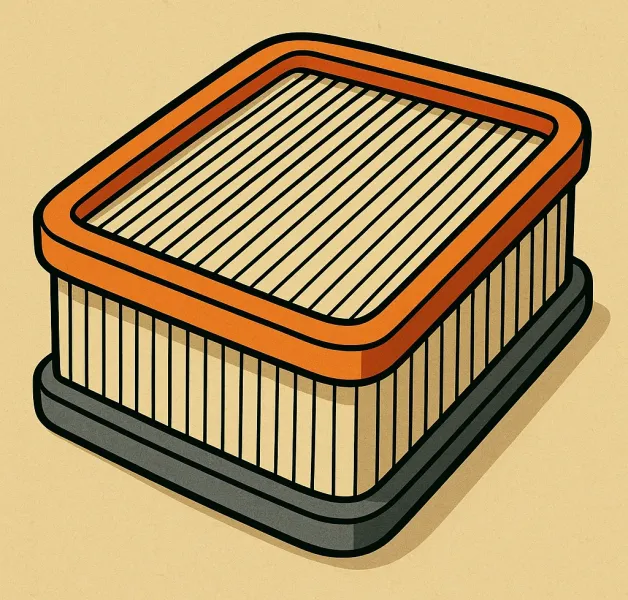
The air filter is a component—typically made of paper, foam, or cotton—responsible for cleaning the air that enters the engine. Before air mixes with fuel for combustion, it must pass through this filter, which traps impurities like dust, sand, leaves, or insects.
Without an efficient filter, the engine could inhale particles that scratch the cylinders, dirty the valves, or damage fuel injection sensors.
⚙️ Main Function
Its most important job is to ensure that only clean air reaches the engine, which leads to:
- More efficient combustion: Clean air allows fuel to burn evenly.
- Engine protection: Prevents premature wear of internal components.
- Lower fuel consumption: A clean filter helps maintain the proper air/fuel mixture.
- Reduced emissions: Better combustion means fewer harmful gases released.
🚗 Types of Air Filters
There are different types depending on material and design:
- Pleated paper filter: The most common, affordable, and effective for most cars.
- Foam filter: Used in off-road vehicles or motorcycles; ideal for dusty environments.
- Cotton or high-flow filter: Designed to enhance performance; used in sports cars and can be cleaned and reused.
⏱️ How Often Should It Be Replaced?
Replacement intervals vary depending on the vehicle type and driving conditions, but generally it’s recommended every 10,000 to 20,000 kilometers. If you frequently drive on dusty roads or in rural areas, it’s wise to inspect and clean it more often.
A dirty filter may show signs like:
- Loss of power or sluggish acceleration
- Increased fuel consumption
- Dark exhaust smoke
- Unusual engine noise or rough idling
🧰 Maintenance Tips
- Check the air filter at least twice a year.
- If it’s reusable, clean it according to the manufacturer’s instructions.
- Avoid hitting or blowing the filter with high-pressure air, as it can damage the filtering fibers.
- Take advantage of oil changes to inspect the air filter as well.