🔋 Car Battery Fluid
The battery fluid, also known as electrolyte, is one of the most important components of a car’s electrical system. Without it, the battery couldn’t store or deliver the energy needed to start the engine and power the vehicle’s electrical systems.
⚙️ What is the battery fluid?
Battery fluid is mainly composed of a mixture of distilled water and sulfuric acid (H₂SO₄). This combination forms the electrolyte, a substance capable of conducting electricity and allowing the chemical reaction that generates energy inside the battery.
Inside an automotive battery, there are several cells that contain lead plates submerged in this liquid. When the battery is charged or discharged, the acid and lead react with each other, releasing or storing electrical energy.
⚡ Function of the battery fluid
The main function of the fluid is to facilitate chemical reactions between the positive and negative plates of the battery. Thanks to it:
-
Electricity is generated to start the engine.
-
The electrical charge is maintained while the car is off.
-
The accumulator can be recharged while the vehicle’s alternator is running.
Without the proper level of electrolyte, the battery loses efficiency, may overheat, or even become permanently damaged.
🚗 Fluid levels and maintenance
Conventional (non-sealed) batteries allow you to manually check and refill the liquid. If you look at the holes on the top, you can see the internal cells and check the fluid level, which should slightly cover the lead plates.
🧴 Important recommendations:
-
Use only distilled water to refill.
Never use tap water, as it contains minerals that can damage the battery. -
Do not add sulfuric acid on your own; the concentration must be exact and should only be adjusted in laboratories or specialized workshops.
-
Check the level every 2 or 3 months, especially in hot climates, where evaporation is greater.
-
Keep the battery clean and dry, avoiding the buildup of white sulfate on the terminals.
⚠️ What happens if the fluid level is low
A low electrolyte level can cause several problems:
-
Difficulty starting the car.
-
Reduced battery lifespan.
-
Damage to internal plates due to air exposure.
-
Risk of overheating or internal short circuits.
If you notice that the battery discharges frequently or emits an acidic smell, the fluid level may be too low or there could be a leak.
🧠 Difference between sealed and conventional batteries
Sealed batteries (also called maintenance-free) don’t require checking the fluid, as they are completely closed and the internal system regulates water evaporation.
In contrast, conventional batteries should be checked periodically to maintain the proper electrolyte level.
🧯 Safety when handling the fluid
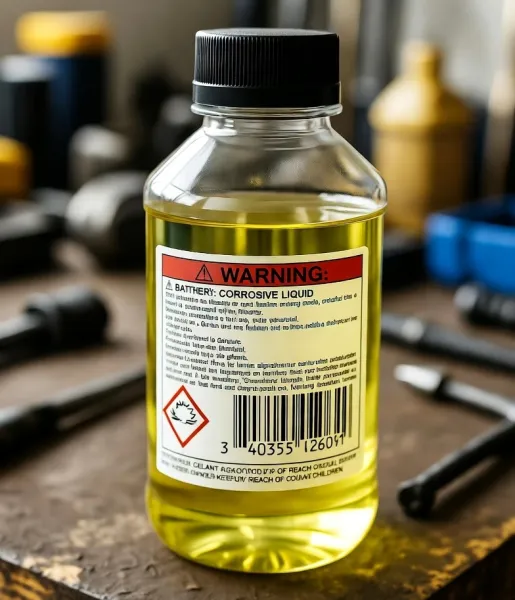
Sulfuric acid is a corrosive substance. If you need to check or refill the battery:
-
Wear gloves and protective goggles.
-
Avoid contact of the liquid with your skin or clothing.
-
Don’t smoke or bring flames near the battery while handling it.
-
Rinse immediately with plenty of water if any accidental contact occurs.