Car Starter Motor
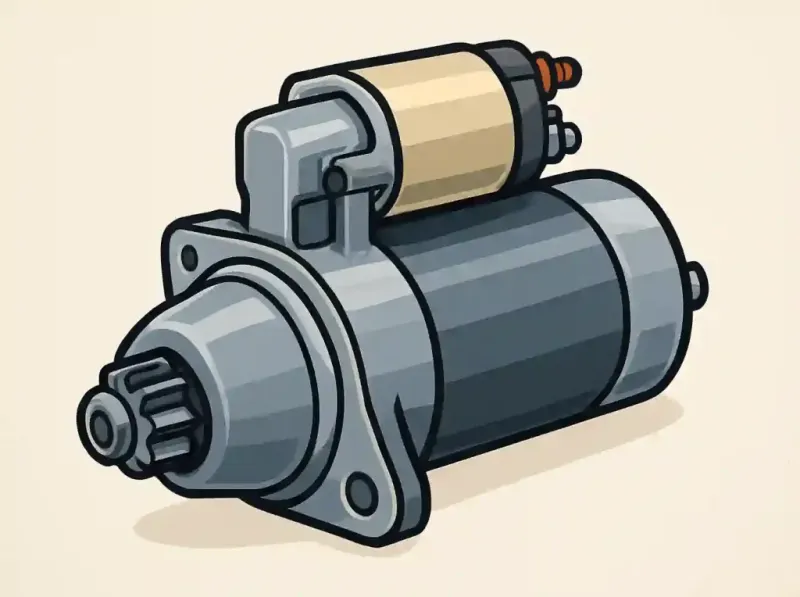
The starter motor is one of the most important components in a vehicle’s ignition system. Without it, the internal combustion engine wouldn’t be able to begin its operating cycle. Although it’s a relatively small part compared to the rest of the system, its role is essential: converting the battery’s electrical energy into mechanical energy to crank the engine until it can run on its own.
In this article, we’ll explain what it is, how it works, its main components, common failure symptoms, and maintenance tips to extend its lifespan.
1. What Is the Starter Motor?
The starter motor is an electric device that enables the engine to start. Its task is to rotate the crankshaft and get the pistons moving, generating the compression and combustion needed for the engine to operate independently.
It functions only during the starting process. Once the engine is running, the starter motor disengages and stops operating.
2. How the Starter Motor Works
The starter motor uses electrical energy from the battery and converts it into rotational motion through a set of gears and coils. The process works as follows:
- Turning the key or pressing the start button → Activates the starter relay or solenoid.
- Current connection → The solenoid allows battery current to flow to the starter motor.
- Bendix gear engagement → The starter pinion engages with the engine’s flywheel.
- Initial engine rotation → The starter motor turns the crankshaft, initiating the combustion cycle.
- Automatic disengagement → Once the engine starts, the gear disengages automatically to prevent damage.
3. Main Components of the Starter Motor
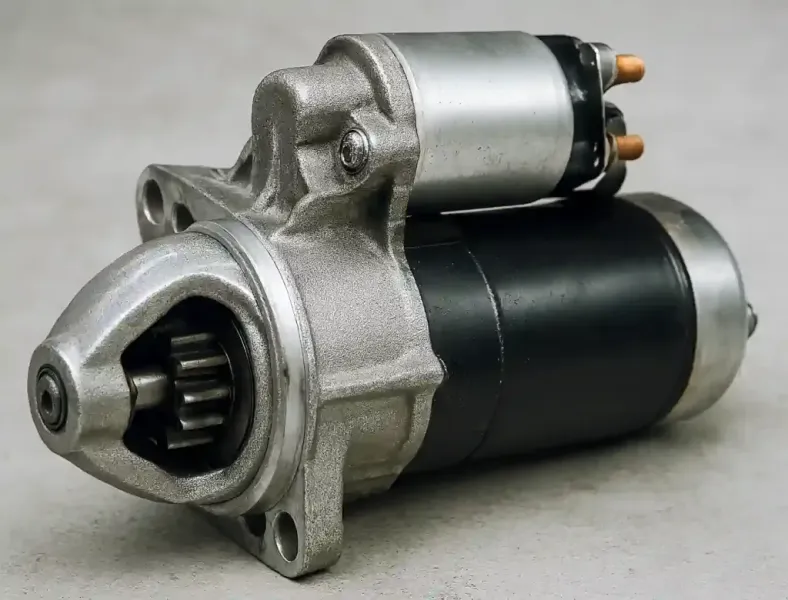
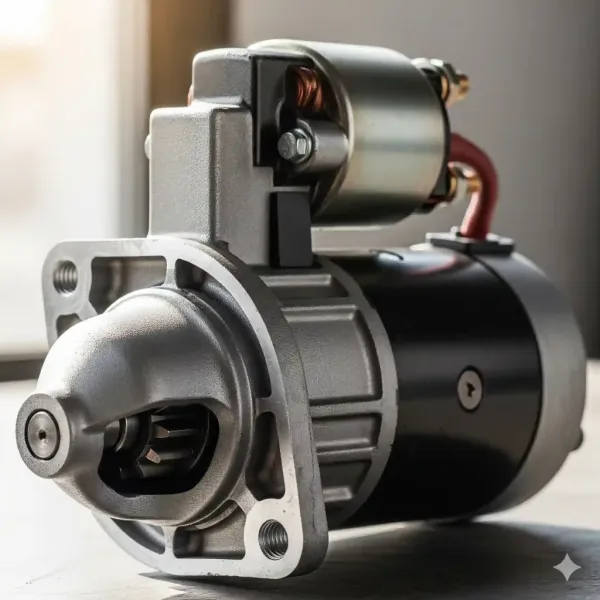
The starter motor consists of several key elements working together:
- Starter solenoid or relay → Activates the flow of electrical current to the motor.
- Bendix gear or drive pinion → Engages the flywheel to transmit motion.
- Rotor and stator → Convert electrical energy into mechanical energy.
- Brushes or carbon contacts → Transfer current to the rotor.
- Reduction gearbox → Increases torque to crank the engine.
- Protective housing → Shields internal components from dust, moisture, and impact.
4. Common Starter Motor Failures
The starter motor can fail due to wear, electrical issues, or mechanical damage. Common symptoms include:
- Repeated clicking when turning the key → May indicate low battery power or a faulty solenoid.
- Engine doesn’t crank → Could be due to worn brushes, a damaged rotor, or blown fuses.
- Metallic noise or squealing → Often signals improper Bendix gear engagement.
- Slow cranking → May suggest low electrical power or internal wear.
5. Starter Motor Maintenance Tips
Although the starter motor doesn’t require frequent maintenance, it’s wise to follow these recommendations:
- Check the battery regularly → A weak battery directly affects starting performance.
- Inspect electrical connections → Clean terminals and prevent corrosion.
- Avoid prolonged starting attempts → Overworking the starter can cause overheating.
- Perform preventive maintenance → Replace brushes and lubricate the Bendix gear based on mileage.
6. Conclusion
The starter motor is a small but critical component in vehicle operation. Without it, the engine simply wouldn’t start. Understanding how it works, recognizing failure symptoms, and applying preventive care can help you avoid unexpected and costly breakdowns.
If you experience starting issues, it’s best to perform a full inspection, as the problem may involve not only the starter motor but also the battery, alternator, or electrical connections.