How often should Engine Oil be changed?
Engine oil is one of the most important elements for a vehicle’s health. Its main functions are to lubricate internal parts, reduce friction, keep the engine clean, and help dissipate heat. However, with use, it loses its properties and must be replaced. The oil change interval depends on factors such as oil type, viscosity, and driving conditions.
Common Recommendations:
Types of Oil and Their Change Frequency
-
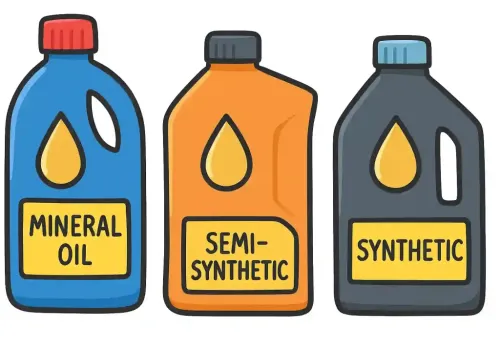
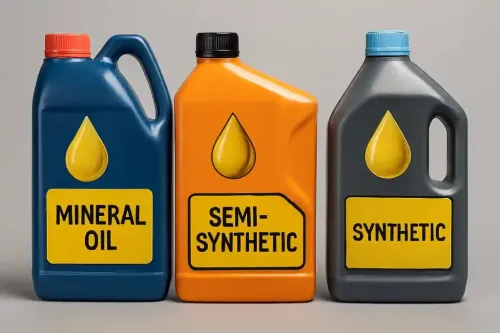
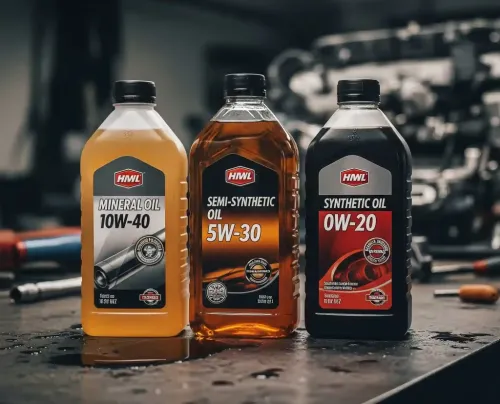
Mineral Oil The most basic and affordable type. Made from refined petroleum, it offers acceptable protection but has lower durability.
- Change interval: Every 4,000 to 5,000 km or every 6 months, whichever comes first.
- Recommended for: Older engines, light use, and warm climates.
-
Semi-Synthetic Oil A blend of mineral and synthetic oil. It offers better wear resistance and thermal stability.
- Change interval: Every 7,000 to 8,000 km or every 8 to 10 months.
- Recommended for: Daily-use vehicles, urban driving, and occasional trips.
-
Synthetic Oil The highest quality, chemically engineered for maximum protection and cleanliness. It withstands high temperatures and maintains viscosity longer.
- Change interval: Every 10,000 to 15,000 km or up to 12 months, depending on the manufacturer.
- Recommended for: Modern cars, demanding driving, extreme climates, and long trips.
What Do Numbers Like 10W-30 or 20W-50 Mean?
These values indicate oil viscosity:
-
The number followed by “W” (for winter) shows how fluid the oil is in cold conditions. The lower the number, the easier it flows at startup.
- Example: 10W flows better in cold climates than 20W.
-
The number after the dash indicates viscosity at high temperatures.
- Example: 30 is thinner at operating temperature than 50, which is thicker.
Common Examples:
- 10W-30: More versatile, ideal for temperate climates and modern engines needing smooth cold starts.
- 20W-50: Thicker, used in older engines, hot climates, or vehicles that consume some oil.
Factors That Can Shorten Oil Change Intervals
Even with high-quality synthetic oil, driving conditions can accelerate degradation:
- Frequent city driving with heavy traffic
- Constant starting and stopping
- Very cold or very hot climates
- Driving with heavy loads or towing
In these cases, it’s advisable to check oil levels every 1,000 km and consider more frequent changes.
Conclusion
There’s no one-size-fits-all answer for oil changes. It depends on oil type, viscosity, vehicle model, and usage conditions. As a general rule:
- Mineral: 5,000 km
- Semi-synthetic: 7,000–8,000 km
- Synthetic: 10,000–15,000 km
Following these guidelines, along with your vehicle’s manual, will ensure a cleaner, more efficient, and longer-lasting engine.