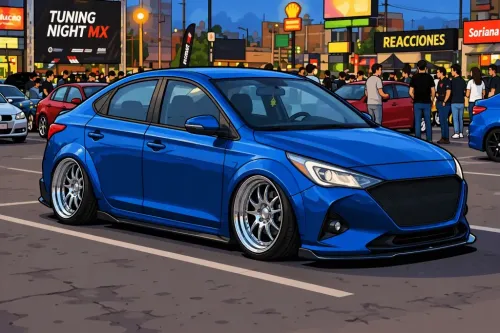
Pros and cons of lowering a car
Cutting or heating springs to lower a car has many disadvantages, and some can directly affect safety.
🚗 Disadvantages of lowering a car by cutting or heating the springs
Loss of suspension travel
By lowering the car, the shock absorber and spring have less available travel. It becomes much easier to bottom out when going over bumps, potholes, or speed bumps.
The car can become much more uncomfortable
The suspension can feel much stiffer and transmit road impacts directly into the cabin.
It can easily scrape underneath
The exhaust, oil pan, subframe, bumpers, and other components end up closer to the ground, especially on speed bumps or steep inclines.
Higher risk of the spring coming loose
This is especially dangerous when cutting springs. When the suspension extends, the spring may no longer sit properly in its perch. It can shift or even pop out, depending on the suspension design.
Heating a spring can weaken it
Heating the spring to permanently compress it alters the properties of the steel. The result can be unpredictable: loss of strength, irregular deformation, or even fracture.
It can cause uneven ride height
Both sides won't necessarily end up at the exact same height. Even a small difference can affect handling and alignment.
It alters suspension geometry
Lowering the body changes the angles of control arms, ball joints, tie rods, and other components.
It can cause uneven tire wear
Altering the geometry can increase negative camber or mess up the toe settings. If not corrected with a proper alignment, tires can wear out quickly on the inside or outside edges.
It can degrade cornering performance
Although lowering the center of gravity can help, a poorly modified suspension can cause the car to lose its ability to keep the tires properly planted on the pavement.
Higher risk of losing traction on bad surfaces
A suspension with limited travel can cause a wheel to lose contact with the ground when hitting bumps or uneven road surfaces.
Shock absorbers operate outside their ideal range
If you lower the car while keeping the factory shock absorbers, they will operate constantly compressed. This can shorten their lifespan and degrade performance.
Increased likelihood of bottoming out
When the suspension reaches the end of its travel, the impact can be severe and transmit high loads to structural components.
Increased wear on suspension parts
Bushings, ball joints, shocks, tie rods, and other parts will be subjected to loads and angles they weren't originally designed for.
It can affect steering response
Geometry changes can alter steering feedback, self-centering, and directional stability.
Worse performance on rough roads
An overly low and stiff suspension might work fine on a perfectly smooth track, but it will perform worse on a bumpy, real-world road.
Tire and wheel fitment issues
Depending on how low the car goes and the wheel size/offset, the tires can rub against the fenders, suspension components, or inner wheel wells.
Reduced passenger capacity
With multiple passengers in the car, the suspension will bottom out much more easily.
Complicates daily driving
Parking ramps, speed bumps, steep driveways, and rough streets become constant headaches.
It can affect safety systems
If the modification significantly alters geometry or vehicle dynamics, it can indirectly affect systems like ABS and stability control (ESP), especially if tire-to-road contact is compromised.
It can reduce resale value
Most buyers prefer stock suspensions or professionally installed kits. Cut or heated springs are usually a red flag.
Hard to revert back to stock
If you cut the original springs, you will have to buy new ones to restore the factory ride height.
Potential legal or inspection issues
Depending on local regulations, an excessively lowered suspension may fail vehicle safety inspections or be illegal for road use.
So, are there any advantages?
Yes, but only if the car is lowered correctly.
Advantages of properly lowering the suspension
Improved cornering response
On cars designed or properly tuned for this, handling can feel sharper, more stable, and more precise.
Reduced body motion
It can reduce front-end dive when braking, squat under acceleration, and body roll during cornering.
Improved aerodynamics
On certain vehicles designed for it, reducing ground clearance can slightly decrease underbody airflow. However, this benefit depends heavily on aerodynamic design.
The critical difference:
Cutting springs ≠ Installing lowering springs (performance springs).
Heating springs ≠ Installing springs engineered for a lower ride height.
A proper performance spring is engineered considering its free length, wire diameter, coil count, spring rate, travel, and vehicle weight ratings. Ideally, it should also be paired with shocks designed for reduced travel.
In the long run, cutting or heating springs becomes an unnecessary expense, as many suspension components will fail prematurely and need frequent replacement.