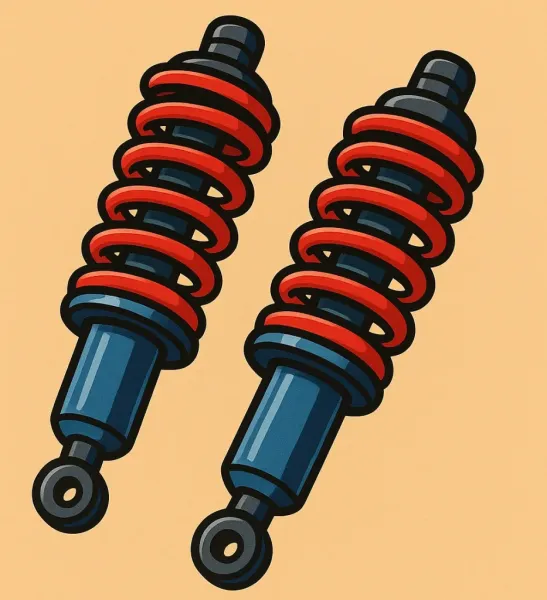
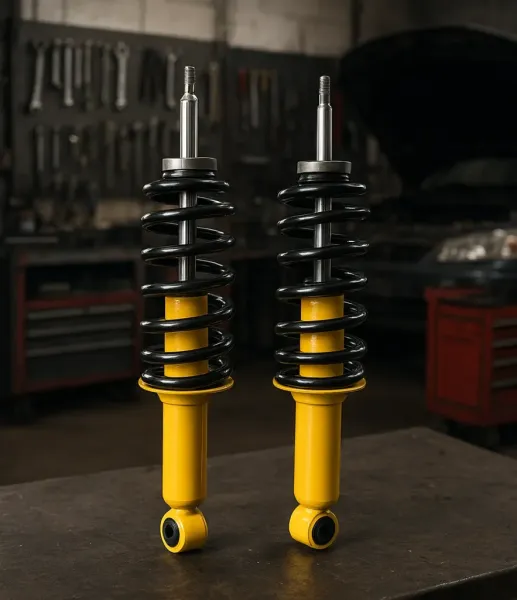
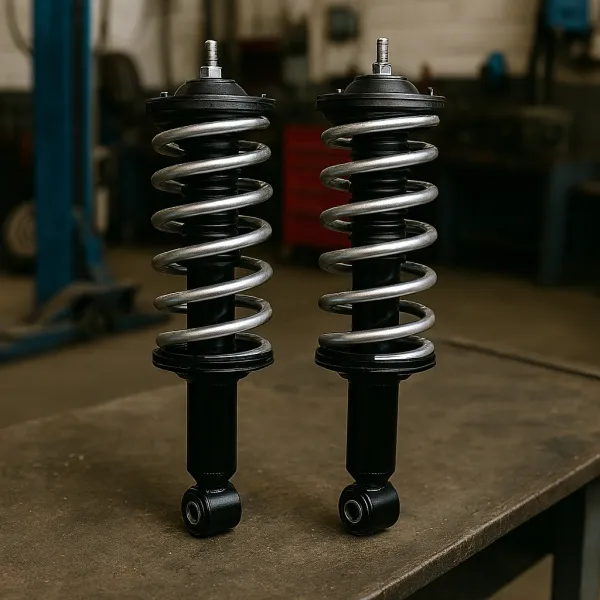
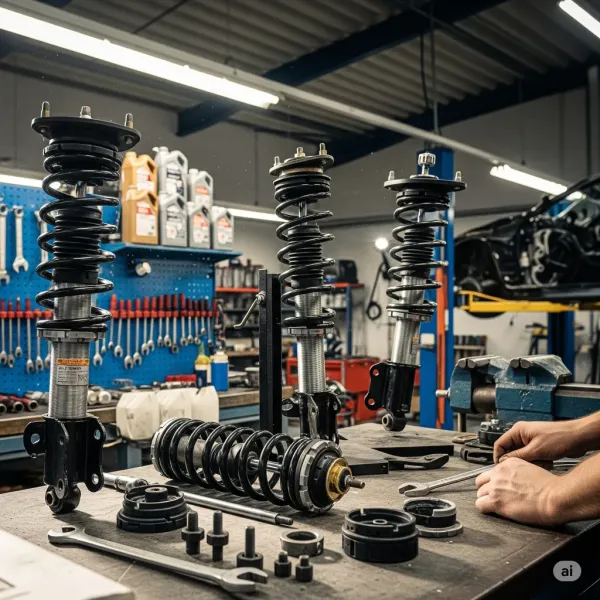
Shock Absorbers Function of a Car’s Shock Absorbers
Shock absorbers are essential components of a vehicle’s suspension system. Their main function is to control and absorb the oscillations produced in the springs when the car goes over bumps, curves, or road irregularities. Without them, the vehicle would bounce uncontrollably, affecting stability, comfort, and safety.
Main Functions:
- Vehicle Stability: Keep the tires in constant contact with the ground, improving control.
- Occupant Comfort: Reduce vibrations and bouncing, offering a smoother ride.
- Safety during Braking and Cornering: Prevent the car from leaning excessively, improving tire grip.
- Protection of Other Components: Reduce wear on tires, ball joints, bushings, and other suspension elements.
Shock Absorber Lifespan
Under normal conditions, shock absorbers have an average lifespan of 60,000 to 80,000 km. However, it’s recommended to check their condition every 40,000 km to prevent suspension damage and maintain vehicle safety.
Their actual lifespan depends on several factors:
- Driving Style: Aggressive driving or rough roads shortens their lifespan.
- Road Conditions: Poorly maintained streets wear down the system faster.
- Part Quality: Higher-quality shock absorbers tend to last longer.
Signs of Wear or Failure
- Excessive bouncing after hitting a bump.
- Increased braking distance.
- Uneven tire wear.
- Steering wheel vibrations or instability in curves.
- Oil leakage around the shock absorber.
Key Facts
- Driving with worn-out shock absorbers can increase braking distance by up to 35%.
- Shock absorbers work in conjunction with springs, bushings, and stabilizer bars; if one fails, the entire system is affected.
- Using low-quality shock absorbers can compromise safety and lead to higher long-term costs.