Connecting Rod Bearings
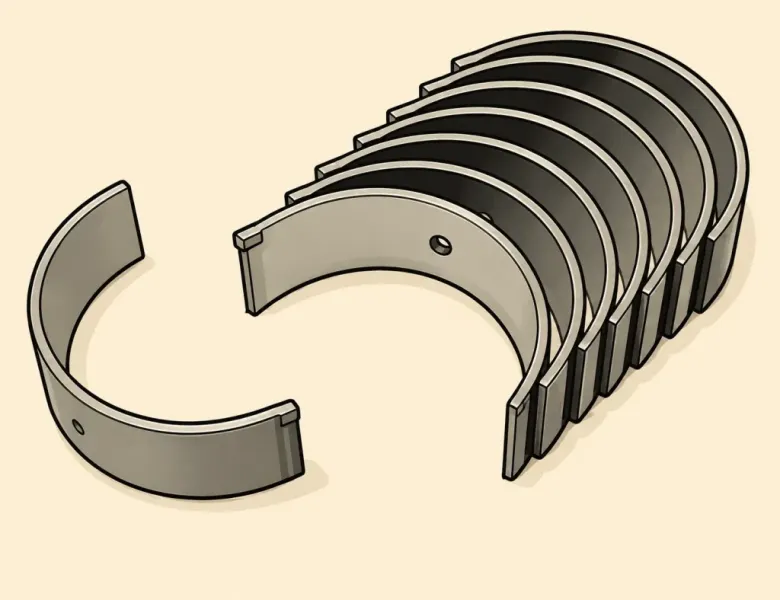
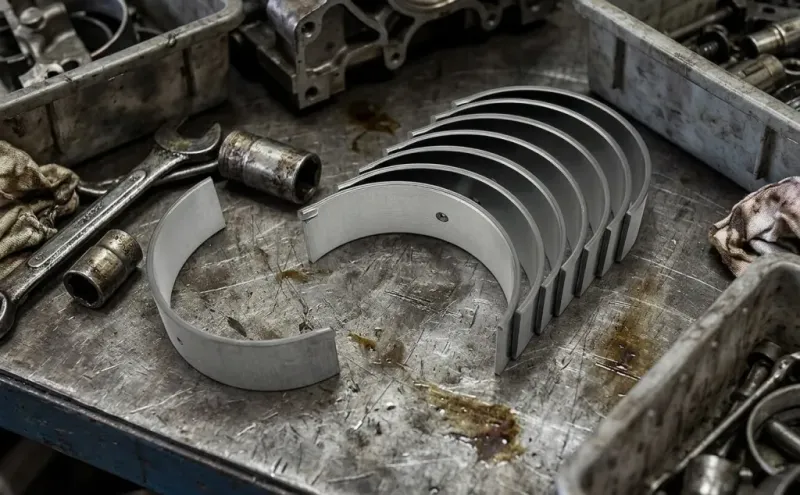
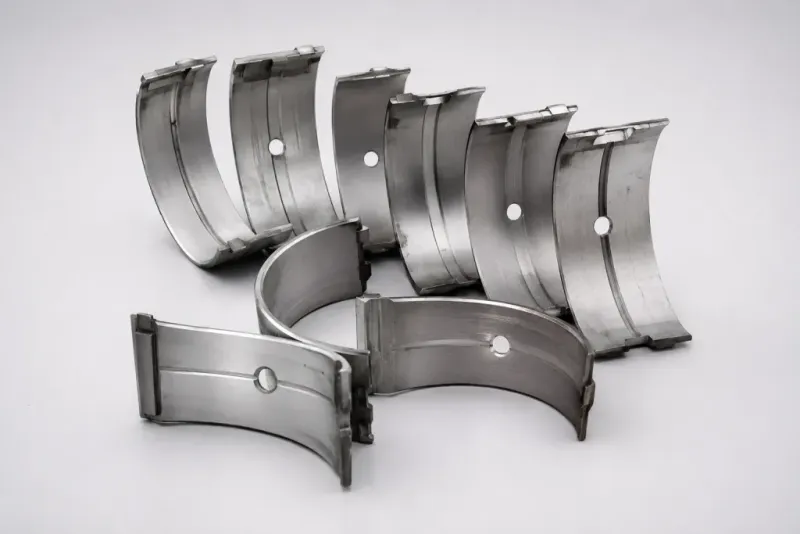
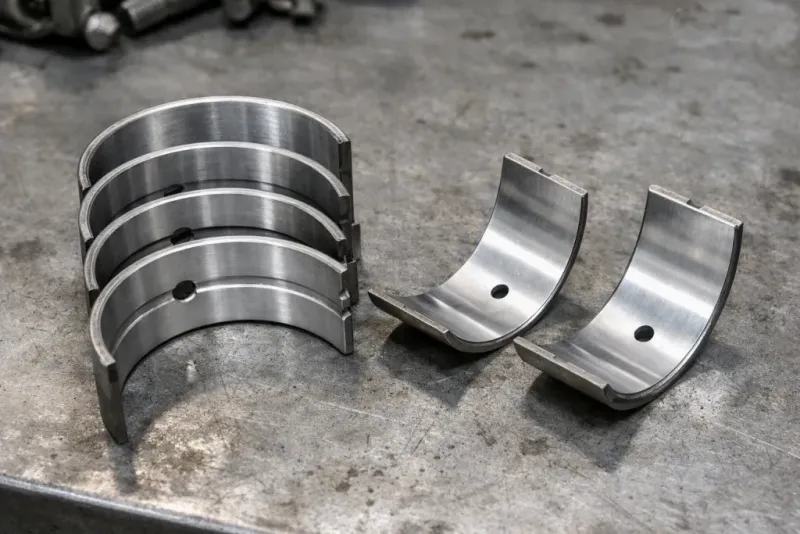
Connecting rod bearings are fundamental components within the internal combustion engine. Although they are small and simple in appearance, they perform an essential function: they allow the connecting rods to rotate smoothly around the crankshaft, reducing direct contact between metal surfaces and preventing premature wear.
Each connecting rod normally uses two bearings: one at the top and another at the bottom. When the rod is installed around the crankshaft, both bearings form a circular surface that allows the crankshaft to rotate inside the rod.
Contrary to what it might seem, the bearing should not work in direct and constant contact with the crankshaft. Between both surfaces there must be a thin film of oil that allows the crankshaft to rotate practically on the oil.
What is their function?
Their main function is to allow movement between the connecting rod and the crankshaft with the least possible friction.
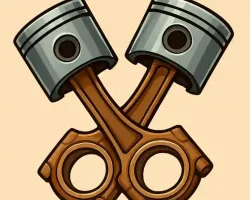
When the engine is running, the piston moves up and down and transmits that motion to the connecting rod. The rod, in turn, is connected to the crankshaft and transforms the piston’s linear motion into rotary motion.
During this process, enormous loads are produced on the joint between the rod and the crankshaft. The bearings must withstand these loads while at the same time allowing movement between both parts.
In addition, the bearings fulfill other important functions:
- Maintain controlled separation between the rod and the crankshaft.
- Allow the formation of a lubricating oil film.
- Help reduce friction and wear.
- Absorb small irregularities between surfaces.
- Protect the crankshaft from excessive wear.
- Help maintain proper oil circulation around the journal.
What materials are they made of?
Modern bearings are usually built with several layers of materials. The composition may vary depending on the manufacturer, the type of engine, and the demands to which they will be subjected.
Generally, they have a strong metallic base and different layers designed to provide good friction properties, wear resistance, and the ability to withstand high loads.
Why do connecting rod bearings wear out?
- Lack of lubrication
- Contaminated oil
- Incorrect clearance
- Crankshaft wear
- Excessive load
How to know if connecting rod bearings are damaged?
One of the most well-known symptoms is rod knock.
It can be heard as a metallic sound coming from the lower part of the engine, especially when the engine is under load or when accelerating.
However, the noise does not always appear at the beginning. A bearing may show wear without producing a clearly perceptible sound.
Other possible signs include:
- Low oil pressure.
- Presence of metallic particles in the oil.
- Metallic knocking from the lower part of the engine.
- Visible wear on the bearings during inspection.
- Damage or scratches on the crankshaft journals.
- Increased clearance between rod and crankshaft.
It is important to note that these symptoms do not always mean that the bearings are responsible. Low oil pressure, for example, can have different causes within the lubrication system.