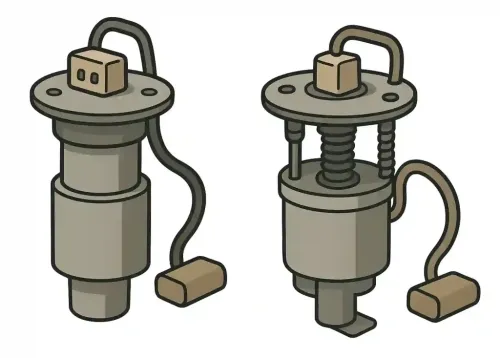
Differences Between Gasoline Pump and Diesel Pump
Fuel supply systems are essential for the operation of any internal combustion engine. Although both gasoline and diesel vehicles use pumps to transport fuel, the way they work and the demands they face are very different.
Gasoline Pump
In gasoline engines with electronic injection, the fuel pump is usually located inside the tank. Its function is to move gasoline toward the injectors at relatively low or moderate pressure, normally between 3 and 5 bar. This system is designed to maintain a constant and sufficient flow, without the need to reach extremely high pressures.
Diesel Pump
In modern diesel engines, the injection system requires much higher pressures to atomize the fuel inside the combustion chamber. For this reason, two pumps are typically used:
-
Feed pump (low pressure): draws fuel from the tank and sends it to the injection system.
-
High-pressure pump: raises diesel pressure to hundreds or even thousands of bar, as in common rail systems, where it can exceed 2,000 bar. This pump is essential for the injectors to work with precision and efficiency.
Key Comparison
-
Operating pressure: gasoline (low to moderate), diesel (very high).
-
Number of pumps: gasoline (one pump), diesel (generally two: low and high pressure).
-
Purpose: in gasoline, to maintain a constant flow; in diesel, to achieve fine atomization for efficient combustion.
While the gasoline pump is mainly responsible for ensuring fuel supply at sufficient pressure for the injection system, the diesel pump is designed to withstand high pressure demands and deliver precise operation. These differences reflect the distinct nature of both fuels and the technology each engine requires to function properly.