The difference between Amps, Volts, and Watts
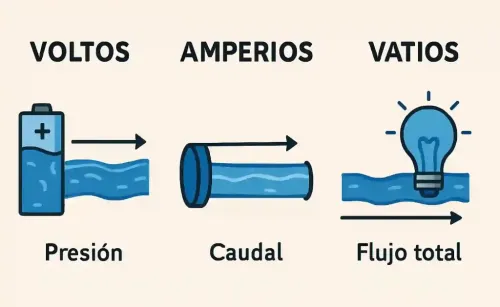
🔋 Volts (V) – The Pressure in the Electrical System
- What they are: Volts measure the force or pressure with which electricity moves through wires.
- Analogy: Imagine a garden hose. Voltage is like the water pressure pushing the flow.
- In cars: Most vehicles operate on 12 volts DC. This voltage powers everything—lights, radio, battery, etc.
- Example: If you plug in a phone charger, it’s designed to work with that voltage. Using a 24V device could fry the system.
🔌 Amps (A) – The Volume of Electricity Flowing
- What they are: Amps measure the amount of electricity flowing per second.
- Analogy: In the hose analogy, amps are the volume of water passing through.
- In cars: The alternator generates current in amps. If you connect many devices, the system must have enough capacity to handle the flow.
- Example: A radio might draw 5A, a laptop with an inverter could go up to 10A or more. If the port’s fuse is rated at 10A and you plug in something that demands 15A, it will blow.
⚡ Watts (W) – The Total Power Consumed
- What they are: Watts indicate how much energy is used or produced. It’s the result of multiplying volts by amps.
- Key formula:
- In cars: Helps you understand how much load you're placing on the electrical system.
- Example: If you connect a laptop that consumes 120W and the system runs at 12V: That means you're using 10 amps from the system.
🧠 Why Does This Matter?
- If you exceed the allowed amperage, you can blow fuses or damage the alternator.
- If you use devices with incorrect voltage, you can fry the equipment or the system.
- If you miscalculate total watts, you can overload the car’s electrical system—and even cause a fire.