The Car Alternator
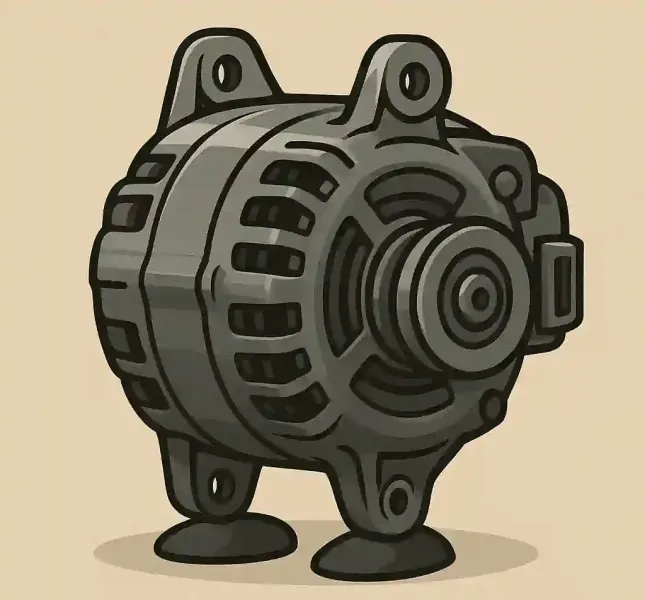
The alternator is one of the most important electrical components in a vehicle, although it often goes unnoticed until it fails. Its main function is to generate the electrical energy needed to keep the car’s systems running and to recharge the battery while the engine is on.
What Is the Alternator?
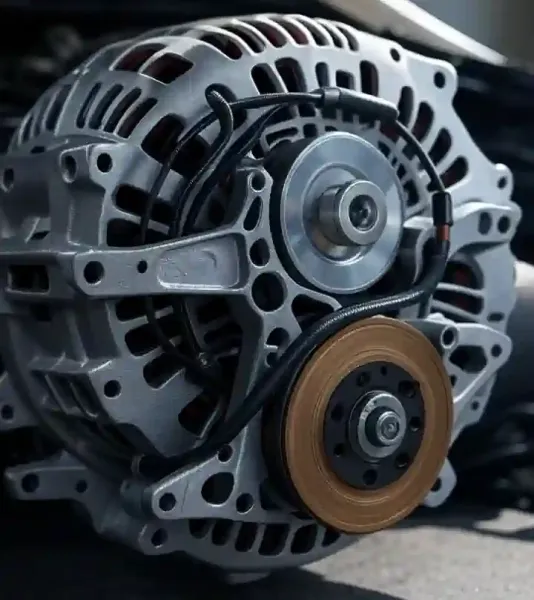
The alternator is an electrical generator that converts the engine’s mechanical energy into alternating current (AC), which is then transformed into direct current (DC) to power the car’s electrical systems and charge the battery. It’s connected to the engine via a belt, commonly known as the accessory belt or serpentine belt.
Main Functions of the Alternator
- Charging the battery: Prevents it from discharging while driving.
- Powering electrical systems: Headlights, radio, air conditioning, windshield wipers, onboard computer, sensors, and more.
- Maintaining stable voltage: Through its built-in voltage regulator, it ensures there are no electrical surges that could damage electronic components.
Symptoms of a Faulty Alternator
- Dim or flickering lights: Both exterior and dashboard lights.
- Frequently drained battery: Even if it’s new.
- Metallic noise or squealing: Coming from the belt or the alternator itself.
- Burning smell: Due to overheating cables or internal bearings.
- Battery warning light on: One of the most common dashboard alerts.
Care and Maintenance
- Inspect the belt: Make sure it’s not loose, cracked, or worn.
- Check electrical connections: Terminals should be clean and corrosion-free.
- Avoid overloading the electrical system: Don’t install accessories that draw more power than the alternator can supply.
- Address noises or faults promptly: To prevent further damage to the battery or the car’s computer.
Alternator Lifespan
Under normal conditions, an alternator can last between 120,000 and 200,000 km. However, its lifespan depends on vehicle usage, belt condition, and the quality of the component itself.