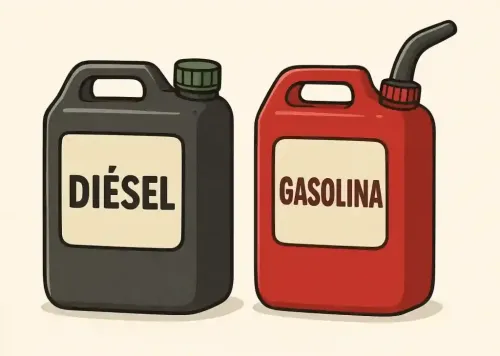
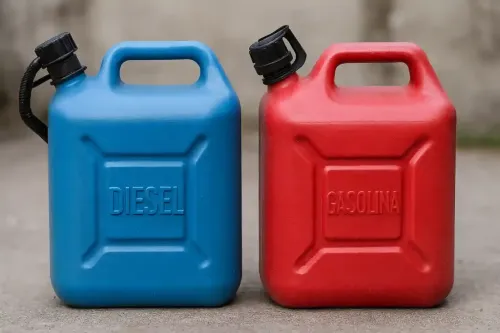
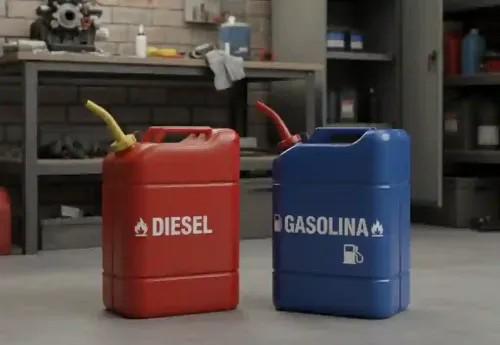
Differences Between Gasoline and Diesel
The choice between a gasoline or diesel vehicle has been, for decades, one of the most common debates in the automotive world. Although both fuels come from petroleum, they present important differences in composition, operation, performance, and cost of use. Below are the main differences between them.
1. Composition and Combustion Process
-
Gasoline: it is lighter, evaporates more easily, and ignites through spark plugs. Gasoline engines work with an air-fuel mixture that ignites thanks to the spark from the plug.
-
Diesel: it is denser and oilier. Diesel engines do not use spark plugs; instead, the fuel ignites due to the high compression of air in the cylinder, which generates enough heat for combustion.
2. Efficiency and Consumption
-
Gasoline: engines are usually smoother and quieter, but they consume more fuel per kilometer traveled.
-
Diesel: stand out for their efficiency. Generally, a diesel engine delivers more kilometers per liter, making it an attractive option for those who travel long distances.
3. Power and Torque
-
Gasoline: provides more power at high revolutions, which is often preferred by those seeking a sportier driving experience.
-
Diesel: delivers greater torque at low revolutions, ideal for cargo vehicles, off-roaders, and heavy transport.
4. Costs and Maintenance
-
Gasoline: vehicles tend to be more affordable in their initial price, and maintenance is usually simpler.
-
Diesel: although maintenance is more expensive and requires specialized attention, the lower fuel consumption can offset the cost in the long run.
5. Environmental Impact
-
Gasoline: produces more carbon dioxide (CO₂) per liter consumed, contributing to the greenhouse effect.
-
Diesel: emits less CO₂, but releases more nitrogen oxides (NOx) and particulate matter, which affect air quality in cities.
6. Recommended Use
-
Gasoline: more suitable for those who use the vehicle for short trips, in the city, or want agile and quiet driving.
-
Diesel: recommended for those who frequently travel long distances, need towing power, or are looking for more efficient consumption.
The choice between a gasoline or diesel car largely depends on how the vehicle will be used. If smoothness, urban driving, and lower initial cost are prioritized, gasoline is the ideal option. On the other hand, if long-term fuel economy, endurance, and torque for demanding routes are sought, diesel is more convenient.