Car Water Hoses
Water hoses in a car are essential components of the cooling system. Although they often go unnoticed compared to more prominent parts like the radiator or water pump, without them the engine couldn’t maintain a proper temperature to operate efficiently and safely.
Main Function
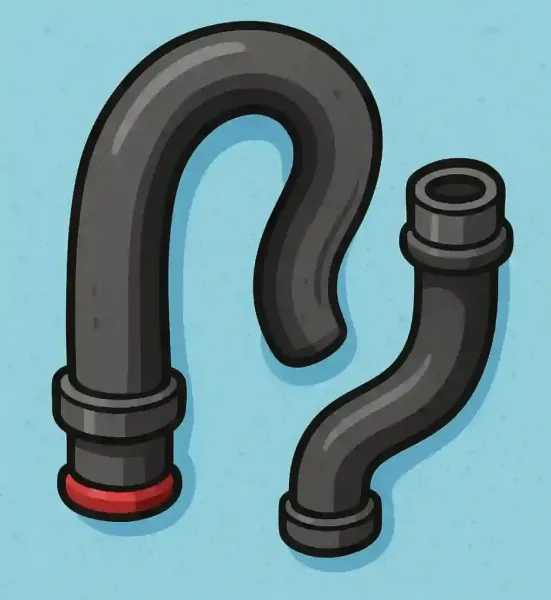
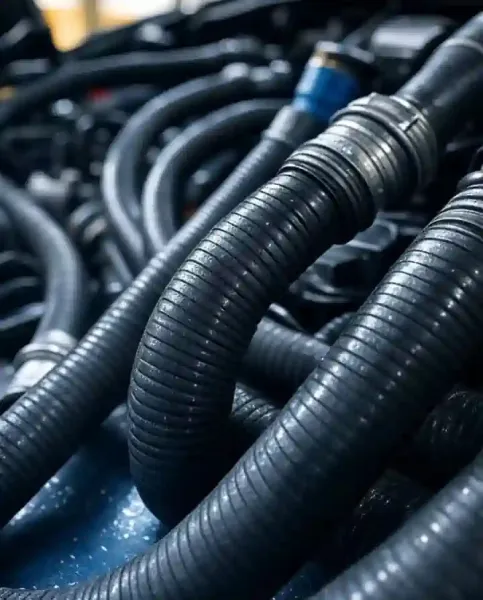
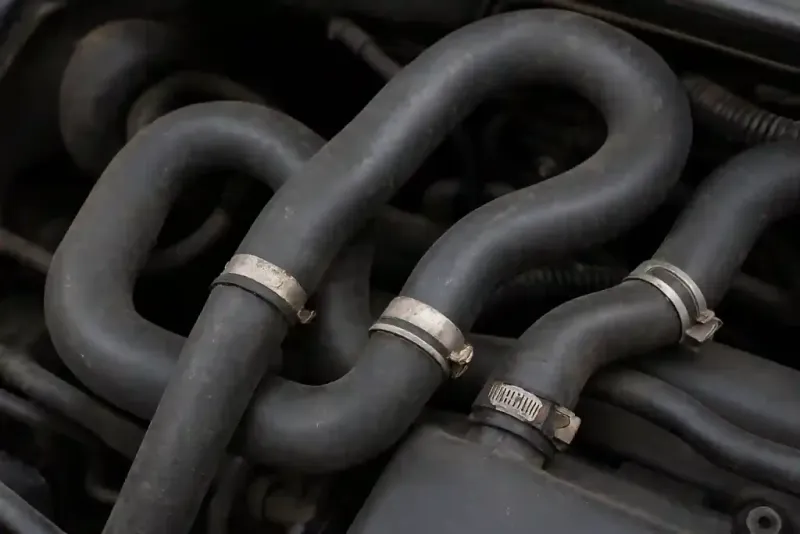
Water hoses allow coolant (a mixture of water and antifreeze) to circulate between the engine, radiator, and other system elements like the cabin heater. They are made from flexible, heat-resistant materials—usually reinforced rubber or silicone—since they must withstand both high temperatures and the internal pressure generated by the fluid.
Types of Hoses in the Vehicle
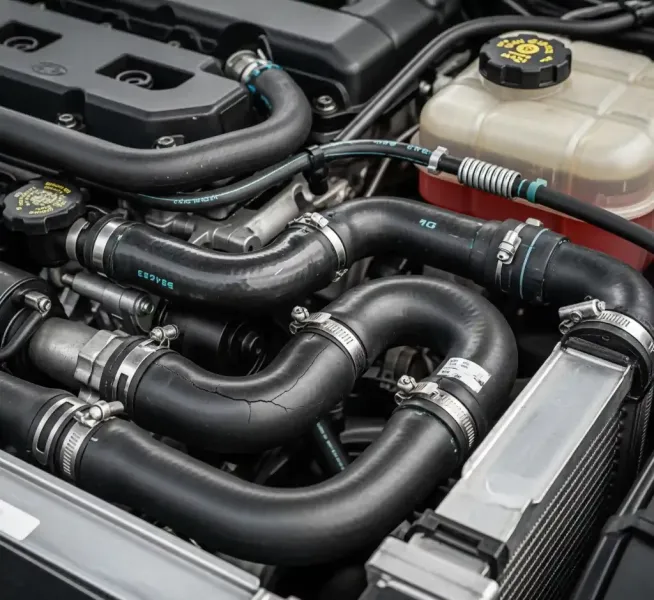
- Upper radiator hose: Connects the top of the radiator to the engine and carries hot coolant from the engine block.
- Lower radiator hose: Returns the cooled fluid to the water pump to restart the cycle.
- Heater hoses: Carry hot coolant to the cabin heating system.
- Bypass and auxiliary hoses: Allow continuous fluid flow in specific situations, such as during cold starts.
Signs of Wear
Over time, hoses degrade due to heat, pressure, and chemical exposure. Some signs that indicate the need for replacement include:
- Visible cracks or bulges on the surface.
- Coolant leaks at joints or clamps.
- Soft or overly rigid texture to the touch.
- Coolant smell or fluid stains under the vehicle.
Maintenance Tips
- Inspect hoses and clamps regularly, at least every 10,000 km.
- Replace them in pairs (upper and lower) when one shows damage.
- Avoid using fluids incompatible with the manufacturer’s specifications.
- Perform preventive replacement every 4 to 5 years, even if no visible issues are present.
Conclusion
Car water hoses are simple yet vital for engine health. A leak or rupture can cause severe overheating in minutes. Investing in regular inspections and timely replacements ensures not only the vehicle’s longevity but also the driver’s peace of mind by preventing unexpected breakdowns.