Brake Pads Function
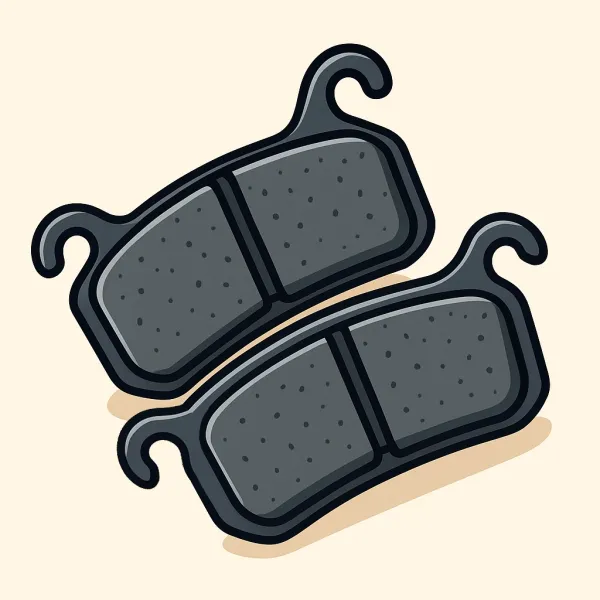
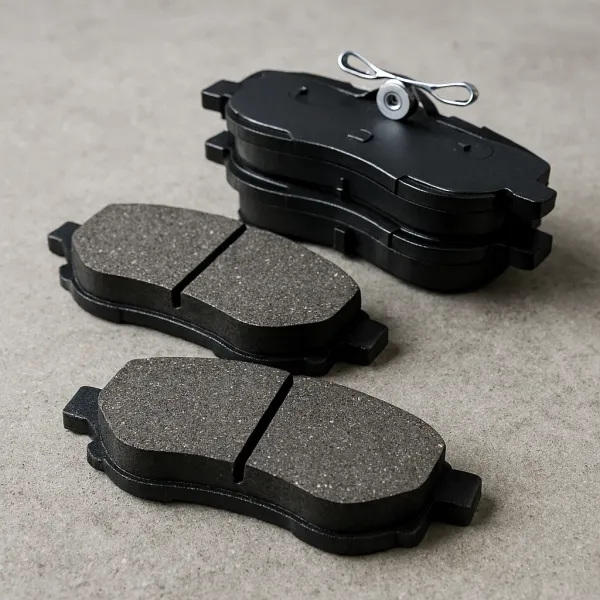
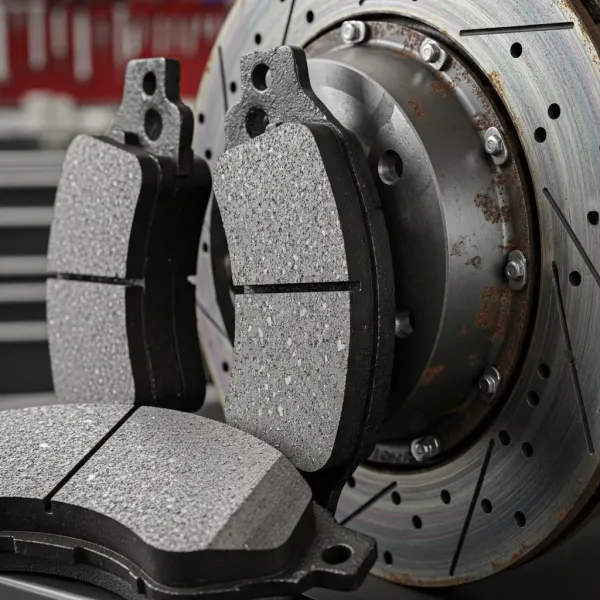
Brake pads are essential components of a disc brake system. Their main function is to generate friction against the brake disc when you press the pedal, allowing the vehicle to slow down or come to a stop.
They are composed of:
- Metal backing plate → Provides structural rigidity.
- Friction material → Typically made from ceramic, metallic, or semi-metallic compounds.
When you press the pedal, brake fluid activates the caliper pistons, pressing the pads against the disc. This generates heat and friction to stop the wheel.
Lifespan
Brake pad lifespan depends on several factors: pad type, driving conditions, vehicle weight, and maintenance. Note: In urban driving with heavy traffic, wear is faster due to frequent braking. On highways, pads tend to last longer.
Types of Brake Pads
Organic Pads
- Average lifespan: 25,000 km – 40,000 km
- Pros: Soft, quiet, affordable
- Cons: Wear out faster and are less effective at high temperatures
Semi-Metallic Pads
- Average lifespan: 35,000 km – 50,000 km
- Pros: Good balance between durability and braking performance
- Cons: Noisier and may wear down the discs
Ceramic Pads
- Average lifespan: 50,000 km – 70,000 km
- Pros: Longer lifespan, stable braking, less dust generation
- Cons: More expensive than other types
Carbon/Kevlar Pads (Performance)
- Average lifespan: 60,000 km or more
- Pros: High performance and resistance to extreme temperatures
- Cons: High cost and uncommon in standard vehicles
Signs of Wear
You should replace brake pads if you notice:
- Metallic squealing → Some models include a wear indicator that scrapes the disc to signal wear.
- Vibrations while braking → May indicate uneven wear or damaged discs.
- Long or spongy pedal travel → Could be wear or air in the system.
- Reduced braking effectiveness → Clear sign that friction material is worn out.
- Dashboard warning light → Some modern vehicles have wear sensors.
Maintenance Recommendations
- Inspect every 10,000 km to detect early wear.
- Replace in axle pairs (both front or both rear), never just one.
- Don’t let them wear down completely → If metal contacts the disc, it can cause damage and costly repairs.
- Use high-quality pads → Cheap ones wear faster and often produce noise.
Additional Facts
- About 80% of braking force in most cars is handled by the front pads, so they wear out first.
- If you hear constant metallic noise, you’re likely braking “metal against metal” → replace pads immediately to avoid disc damage.
- Keeping brake discs clean and groove-free extends pad life.
- In automatic cars, pad wear tends to be higher than in manuals due to more frequent braking.
Summary
- Function: Stop the car by generating friction against the disc.
- Lifespan: Between 25,000 and 70,000 km depending on material and driving style.
- Maintenance: Inspect every 10,000 km, replace in pairs, and avoid complete wear.
- Extra Tip: Front pads wear out first due to greater braking load.