Car Brake Calipers
The braking system is one of the most important components of any vehicle, and within it, the brake calipers play a crucial role. Although they often go unnoticed compared to more familiar parts like discs or pads, calipers are the true agents responsible for applying the force that stops the wheels.
🚗 What Is a Brake Caliper?
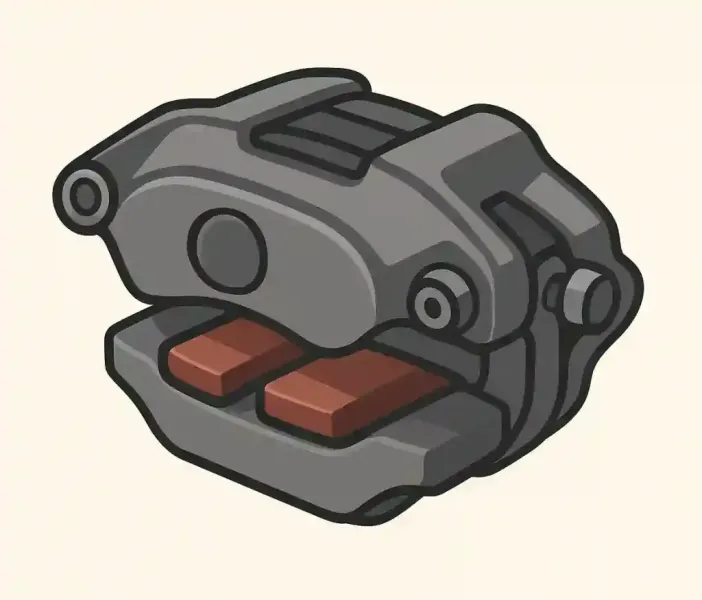
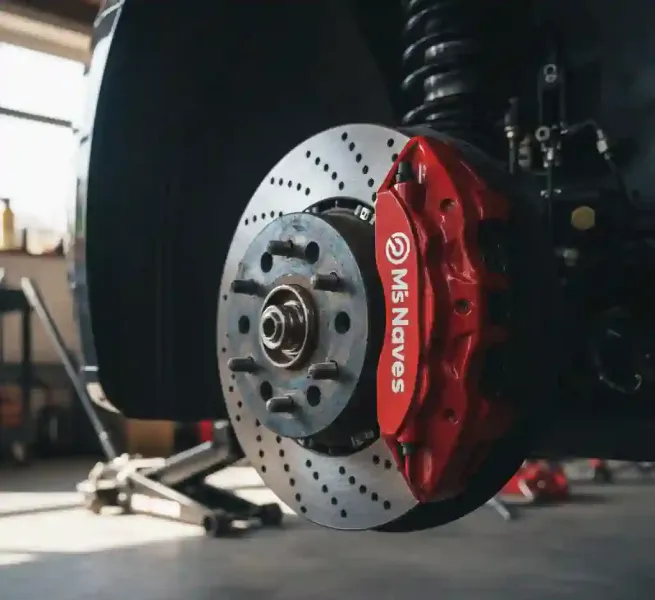
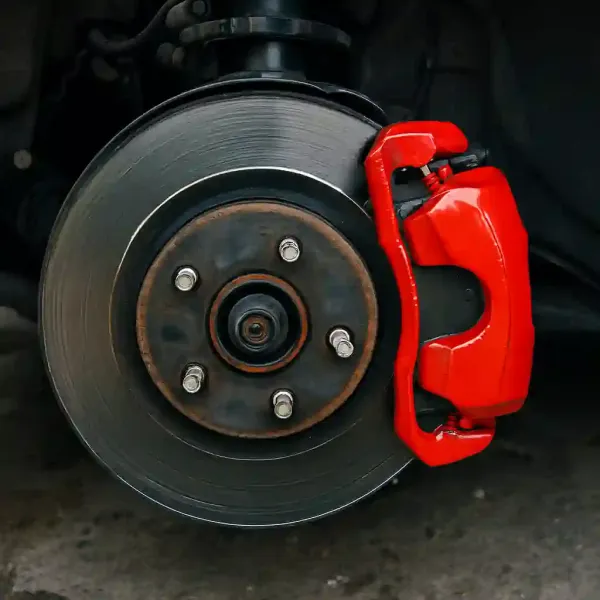
The caliper is a metal component located over the brake disc, whose main function is to press the brake pads against the disc when the driver steps on the brake pedal. This mechanism converts hydraulic energy (from the brake fluid) into mechanical energy, generating the friction needed to slow down or completely stop the vehicle.
In simple terms: the caliper acts like a hand that squeezes the brake disc with the pads when braking is needed.
⚙️ Main Components of a Caliper
A typical caliper consists of several essential elements:
- Caliper body: usually made of aluminum or cast iron, it supports the entire assembly.
- Pistons: cylinders that push the brake pads when receiving pressure from the brake fluid.
- Seals and dust boots: prevent fluid leaks and protect the pistons from dust and moisture.
- Guide pins or sliding bolts: allow smooth movement of the caliper when applying or releasing the brakes.
- Brake pads: friction surfaces that press against the disc.
🔧 Types of Calipers
There are two main types of calipers, depending on their design and operation:
- Floating or sliding caliper: The most common in everyday vehicles. It has one or two pistons on one side of the disc. When the piston pushes one pad, the caliper slides, applying pressure on both sides. It’s lighter and more economical, though less powerful.
- Fixed caliper: Uses pistons on both sides of the disc, offering more balanced and powerful pressure. Common in sports or high-performance vehicles. Its structure is more robust, but also heavier and more expensive.
🧩 How a Caliper Works
When the driver presses the brake pedal:
- Brake fluid transmits pressure from the master cylinder to the caliper pistons.
- The pistons move outward, pushing the pads against the brake disc.
- The generated friction converts the vehicle’s kinetic energy into heat, slowing it down.
- When the pedal is released, the pistons return to their original position and the pads slightly separate from the disc.
⚠️ Symptoms of a Faulty Caliper
A damaged or stuck caliper can cause several serious issues. Common symptoms include:
- The vehicle pulls to one side when braking.
- Burning smell coming from a wheel.
- Metallic noise or vibrations when braking.
- Uneven wear on pads or disc.
- Brake sticking or wheel not rotating freely.
If these symptoms appear, it’s essential to inspect the brake system as soon as possible.
🔩 Maintenance and Care
Although calipers don’t require frequent replacement, they do need preventive maintenance:
- Periodically check the condition of the brake fluid.
- Replace seals and dust boots if damaged.
- Clean and lubricate the sliding guides to prevent sticking.
- Avoid operating the system with leaks or air in the hydraulic lines.
A well-maintained caliper ensures effective braking and safer driving.
🏁 Conclusion
The brake caliper is a discreet but vital part of vehicle safety. Without its precise and reliable action, the braking system wouldn’t function properly. Understanding how it works and maintaining it not only improves vehicle performance but also helps prevent accidents and costly repairs.
In short, every time you press the brake and the vehicle stops smoothly, you can thank the calipers for doing their silent but indispensable job.