🔧 Radiator Fan
What it is, what it’s for, and how to know if it fails
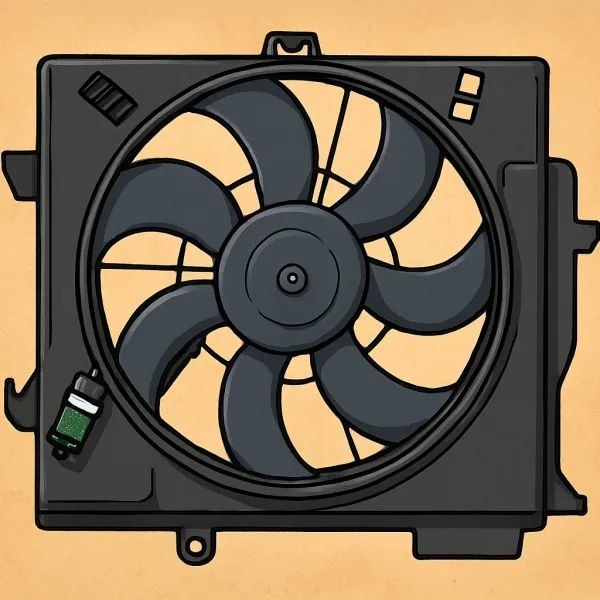
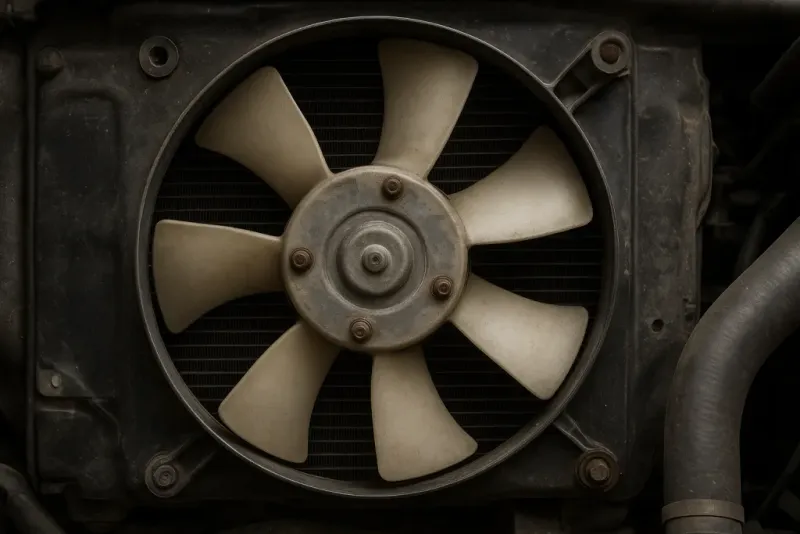
The radiator fan, also known as the cooling fan or simply “fan,” is an essential part of the vehicle’s cooling system. Although it is often confused with the radiator or thought to be a secondary component, its real function is to prevent the engine from overheating—especially when the car is stopped or moving at low speed.
🚗 What is the radiator fan?
It is an electric fan (in most modern vehicles) or belt/clutch-driven (in some older or larger vehicles) located just behind or in front of the radiator. Its main function is to force air through the radiator, helping to dissipate the engine’s heat.
❄️ What is it for?
The radiator fan has three main purposes:
- Keep the engine temperature at safe levels When the car is in traffic, stopped, or moving slowly, there isn’t enough natural airflow through the radiator. The fan kicks in to compensate.
-
Prevent overheating Without the fan, temperature would rise quickly when the car is idle. This could cause serious damage such as:
- Blown head gasket
- Coolant loss
- Warped metal parts
- Risk of complete engine failure
- Support the air conditioning system In many vehicles, the fan also helps stabilize the condenser temperature, ensuring more efficient cooling inside the cabin.
⚡ Types of radiator fans
-
Electric fans (most common today)
- Powered by an electric motor
- Turn on automatically via temperature sensors or when the A/C is activated
- More precise and efficient
-
Clutch-driven fans (used in older cars, trucks, and large SUVs)
- Driven by the engine belt
- Speed increases or decreases depending on temperature
🔍 When does the radiator fan turn on?
It depends on the vehicle, but typically:
- When the engine reaches a certain temperature (approx. 90–105 °C / 194–221 °F)
- When the air conditioning is turned on
- When the temperature sensor or control module determines it’s needed
⚠️ Symptoms of a faulty radiator fan
If the fan doesn’t work properly, the car can overheat within minutes. Common signs include: 🔥 1. Overheating when stopped ❄️ 2. Weak A/C cooling, especially in traffic 🌀 3. Fan doesn’t turn on even with high engine temperature 🔊 4. Strange noises (squealing, buzzing, knocking) from worn motor or damaged blades 🔌 5. Fan stays on all the time (possible relay, sensor, or wiring issue)
🧰 Common causes of fan failure
- Burned-out fan motor
- Blown fuse or faulty relay
- Defective temperature sensor
- Corroded wiring or connectors
- Broken or unbalanced blades
- A/C module malfunction
🔧 How is it repaired or replaced?
It depends on the issue:
- Fuse or relay → easy replacement
- Fan motor → usually replaced as a whole unit
- Wiring → repaired or connector replaced
- Temperature sensor → requires diagnosis and replacement
- Dual fans (A/C and engine) → one or both may fail; check separately
📌 Tips to keep the radiator fan in good condition
- Check coolant levels regularly
- Avoid pressure-washing the engine near electrical connectors
- Address any temperature spikes immediately
- Listen for unusual noises when turning on the A/C or stopping the car
- Perform preventive maintenance on the cooling system