Steering Tie Rod Ends
Steering tie rod ends are essential components of a vehicle’s steering system. Although they are small parts, they play a key role in stability, maneuverability, and driving safety. Their main function is to connect the steering rack to the front wheels, allowing them to turn precisely when the driver moves the steering wheel.
In this article, I’ll explain what they are, how they work, the types that exist, signs of wear, and some maintenance recommendations.
1. What Are Steering Tie Rod Ends?
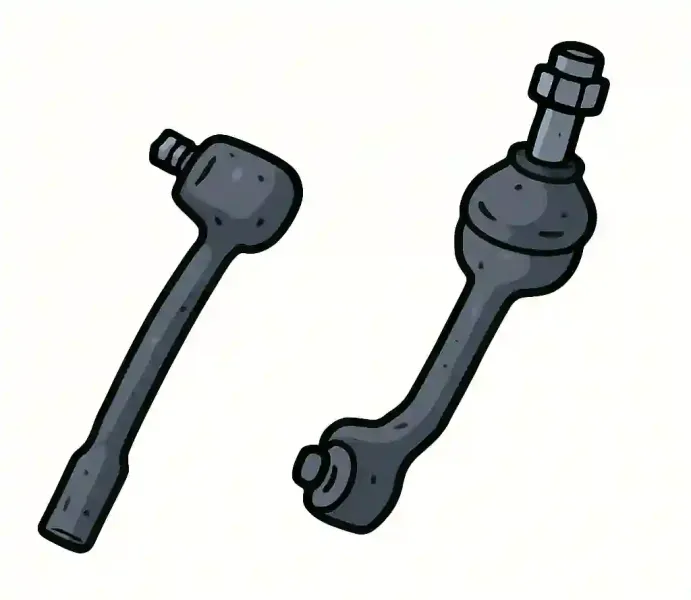
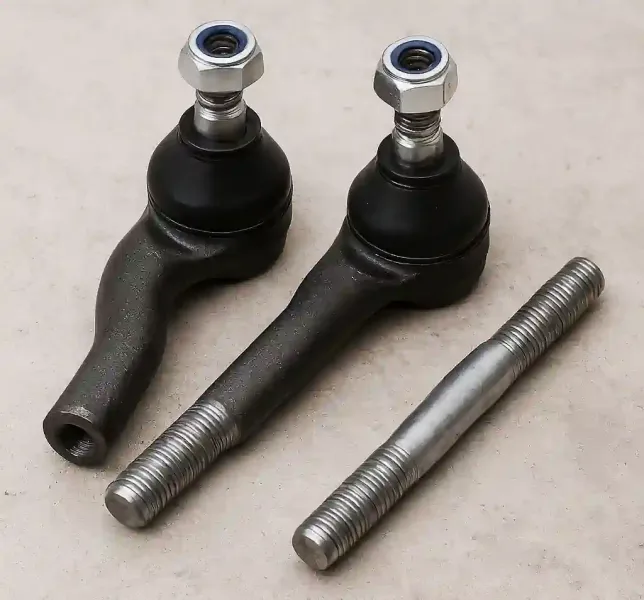
Steering tie rod ends, also known as ball joints or tie rod ends, are metal parts that form part of a car’s steering system. They are located at the ends of the steering rack and connect directly to the steering knuckles of the front wheels.
Each tie rod end includes:
- A spherical ball joint that allows movement in multiple directions.
- A threaded shaft that facilitates adjustment and alignment.
- A dust boot that protects the joint from dust, water, and dirt.
2. Function Within the Steering System
Tie rod ends serve three main functions:
- Transmit steering movement → When you turn the steering wheel, the steering box moves the rack, and the tie rod ends transfer that movement to the wheels.
- Absorb vibrations and motion → Thanks to the ball joint, they allow the suspension to move freely without losing steering control.
- Maintain proper alignment → They are essential for keeping the wheels at the correct angle while driving.
3. Types of Steering Tie Rod Ends
They can be classified mainly into two types:
a) Outer Tie Rod Ends
- These are the most visible and are located at the end of the steering rack.
- They directly transmit movement to the wheel’s steering knuckle.
b) Inner Tie Rod Ends
- These connect directly to the steering rack or box.
- They work together with the outer tie rod ends to move the wheels precisely.
In many modern vehicles, both types work in tandem and are often replaced in pairs to maintain steering symmetry.
4. Symptoms of Worn Tie Rod Ends
When tie rod ends begin to fail, driving safety and comfort are compromised. Common signs of wear include:
- Clunking or metallic noises when going over bumps or turning the wheel.
- Excessive play in the steering wheel or a “loose” steering feel.
- Steering wheel vibrations at certain speeds.
- Uneven tire wear due to poor alignment.
- Difficulty keeping the car in a straight line.
If you notice any of these symptoms, it’s advisable to inspect the steering system as soon as possible.
5. Consequences of Not Replacing Worn Tie Rod Ends
Ignoring a faulty tie rod end can lead to:
- Loss of wheel alignment.
- Premature tire wear.
- Damage to other components, such as the steering rack.
- In extreme cases, total loss of vehicle control.
6. Maintenance Recommendations
- Inspect tie rod ends every 10,000 km or during each alignment.
- Check that dust boots are intact and not torn.
- Replace tie rod ends in pairs to maintain balanced steering behavior.
- Perform an alignment after any replacement.
- Avoid potholes, curbs, and sudden impacts that could damage them.
Conclusion
Steering tie rod ends are fundamental parts for ensuring safe and stable handling. Their good condition ensures that steering wheel movement is properly transmitted to the wheels, preventing unnecessary tire wear and protecting other suspension components.
If you notice noises, vibrations, or alignment issues, don’t ignore them—get an inspection done promptly and replace the parts if needed. Your vehicle’s safety—and yours—largely depends on these small but vital elements.