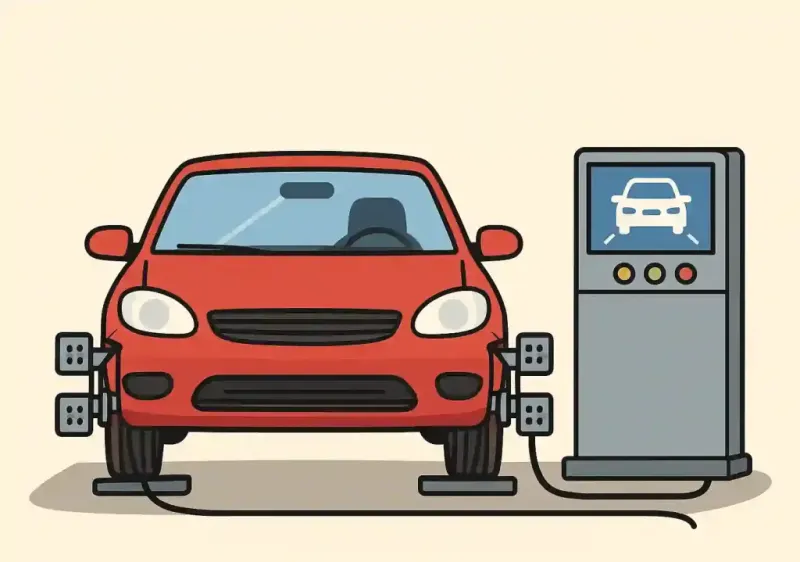
Car Alignment
Car alignment is one of the most important yet often undervalued maintenance services by drivers. While many associate it solely with steering, it actually affects safety, performance, fuel efficiency, and tire lifespan.
What is alignment?
Alignment involves adjusting the angles of the wheels so that they work parallel to each other and perpendicular to the ground. This process is carried out using specialized equipment that ensures the vehicle maintains a straight and stable trajectory.
The main angles adjusted during alignment are:
- Toe: the angle that causes the tires to point toward or away from each other at the front.
- Camber: the inward or outward tilt of the tire when viewed from the front.
- Caster: the angle of the steering axis that affects stability and steering wheel return.
Signs your car needs alignment
A misaligned vehicle may show several symptoms:
- The steering wheel pulls to one side while driving straight.
- Uneven tire wear, usually more pronounced on one edge.
- Steering wheel vibrations at certain speeds.
- Difficulty maintaining a straight path without constant correction.
Benefits of proper alignment
- Improved safety: the car responds better during emergency maneuvers.
- Reduced tire wear: helps extend tire life and save money.
- Better fuel efficiency: rolling resistance decreases when wheels are properly aligned.
- More comfortable driving: eliminates annoying vibrations and pulling.
How often should a car be aligned?
The general recommendation is to perform alignment every 10,000 to 15,000 kilometers or at least once a year. It should also be done after changing tires, hitting a major pothole, climbing a curb, or repairing the suspension or steering system.
Conclusion
Car alignment is not a luxury but a necessity to maintain safety, performance, and savings in daily vehicle use. A preventive check can help avoid costly repairs and ensure a smoother, more reliable driving experience.