Coolant Guide
Have you ever wondered what keeps your engine at the perfect temperature, preventing it from turning into a block of molten metal? The answer is coolant—a vital fluid that often goes unnoticed, yet plays the role of a silent hero in your vehicle’s cooling system.
What Is Coolant?
Coolant isn’t just water. It’s a specialized mixture of glycol (typically ethylene glycol or propylene glycol), distilled water, and a series of chemical additives. This combination gives it unique properties that plain water alone cannot offer:
- High Boiling Point: Glycol allows the mixture to boil at much higher temperatures than 100°C, preventing engine overheating—especially in hot climates or high-performance conditions.
- Low Freezing Point: It protects the engine from freezing damage in winter, as the liquid doesn’t turn into ice that could expand and crack internal engine parts.
The additives are also crucial, as they prevent corrosion and rust formation in the cooling system and lubricate the water pump.
Why Is Coolant So Important?
Coolant’s role goes far beyond preventing freezing or overheating. It’s essential for your vehicle’s long-term health:
- Thermal Regulation: Keeps the engine within its optimal operating temperature range, which is key to efficiency and avoiding catastrophic damage. An overheated engine can suffer warped cylinder heads, gasket failures, and drastically reduced lifespan.
- Corrosion Protection: Metals in the cooling system (radiator, water pump, hoses) are prone to corrosion. Coolant additives form a protective layer that prevents rust and component degradation.
- Water Pump Lubrication: Additives also lubricate the seals and bearings of the water pump, a critical part of coolant circulation, extending its service life.
Types of Coolant: Not All Are the Same!
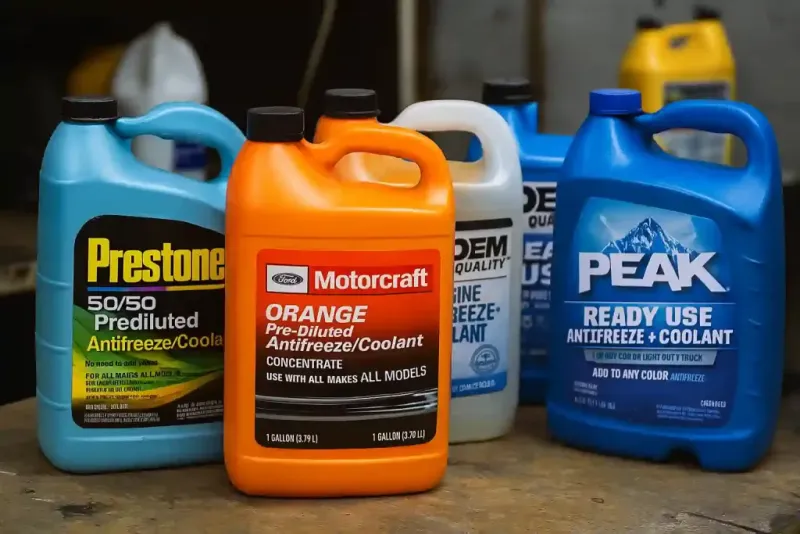
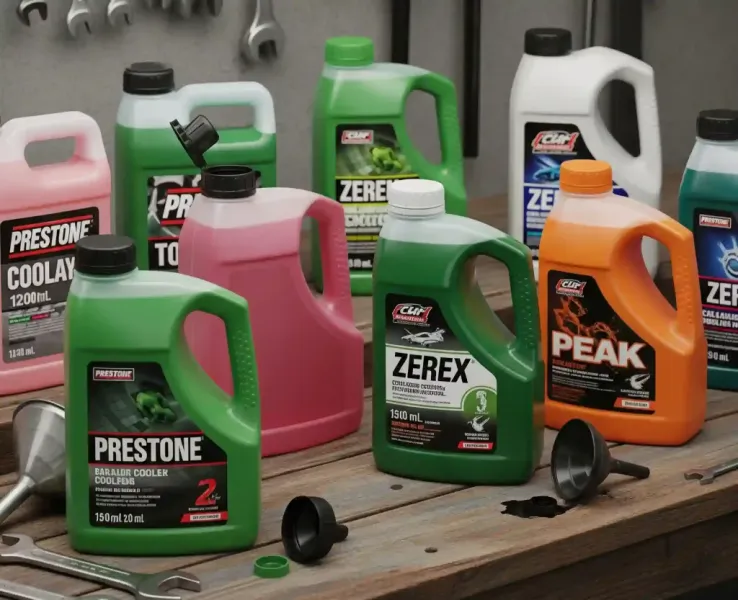
This is one of the most important points: never mix different types of coolant. Doing so can trigger a chemical reaction that cancels out their protective properties and, in the worst case, forms a gel that clogs the entire cooling system. Most coolants are color-coded, but color alone is not a reliable indicator—always follow your vehicle manufacturer’s specifications.
The most common types are:
- Inorganic Acid Technology (IAT): Traditional green coolant. Uses silicates to protect metals and requires more frequent changes (every 30,000–50,000 km).
- Organic Acid Technology (OAT): More modern coolants, often orange, pink, or red. Long-lasting and free of silicates and phosphates, ideal for engines with more aluminum components.
- Hybrid Organic Acid Technology (HOAT): A blend of IAT and OAT technologies. Common in yellow or blue/turquoise colors, offering excellent long-term protection.
Maintenance and Key Tips
- Regular Checks: Inspect the coolant level in the expansion tank at least once a month, always with the engine cold. The level should be between the “min” and “max” marks.
- Consult the Manual: Your vehicle’s manual is the best guide. It specifies the exact type of coolant to use and the recommended change intervals.
- Use the Correct Type: If topping off, make sure to use the same type of coolant already in your system. If unsure, use a “universal coolant” compatible with all types—or better yet, consult a mechanic.
- Pre-Mixed Coolant: If you’re not experienced, use pre-mixed coolant. Avoid concentrates unless you know the exact mixing ratio with distilled water.
Keeping your cooling system in good condition is one of the smartest investments to extend your engine’s life. Ignoring this simple maintenance can lead to very costly repairs. Remember: a well-maintained engine is one that gets you where you need to go—without setbacks.