🔧 Expansion Valve
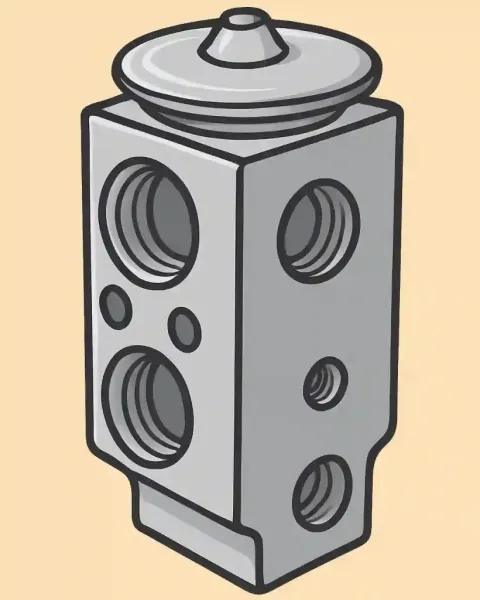
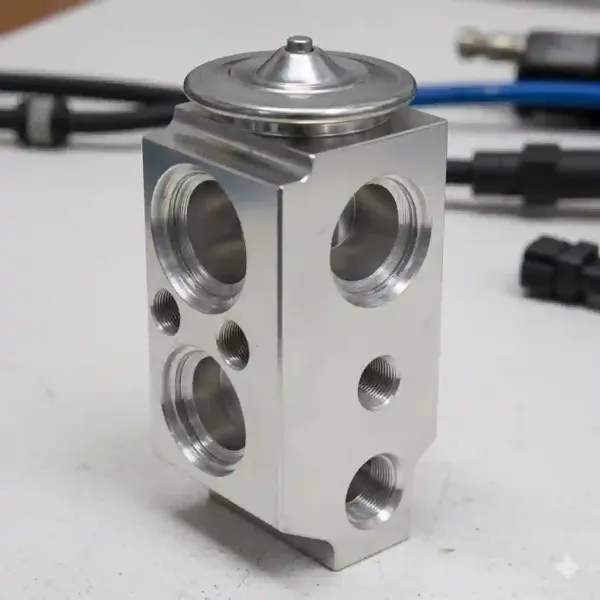
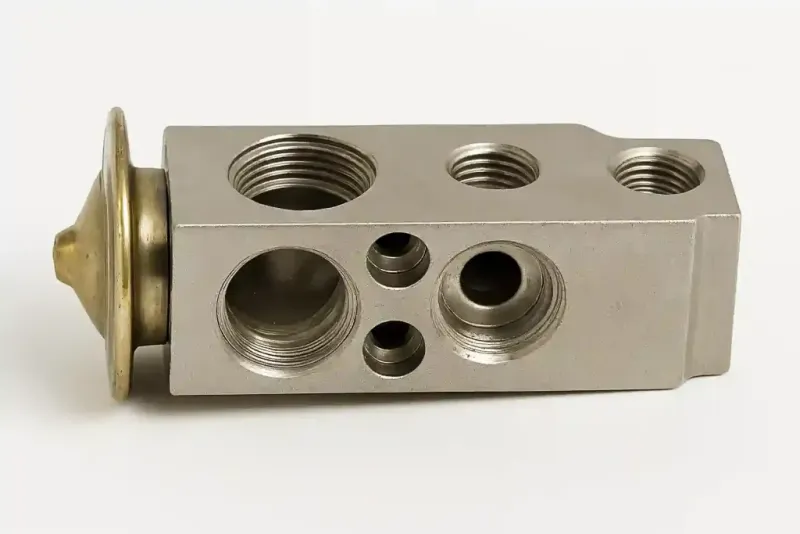
The expansion valve is an essential component in air conditioning and refrigeration systems. Its main function is to regulate the flow of liquid refrigerant into the evaporator, ensuring efficient heat transfer and protecting the compressor from damage caused by liquid return.
🌀 How Does It Work?
The expansion valve acts as a pressure and temperature regulator. Refrigerant arrives from the condenser in a high-pressure liquid state. As it passes through the valve, its pressure drops dramatically, causing a temperature decrease. This cold, expanded refrigerant enters the evaporator, where it absorbs heat from the surrounding environment.
In the case of thermostatic expansion valves (TXV), the flow is automatically adjusted by a sensing bulb that detects the suction temperature at the evaporator. This sensor controls a diaphragm that opens or closes the refrigerant passage based on thermal conditions.
⚙️ Types of Expansion Valves
-
Thermostatic Expansion Valve (TXV / TEV)
- Operation: Uses a sensing bulb to detect the evaporator outlet temperature and adjusts refrigerant flow based on demand.
-
Advantages:
- Precise control of refrigerant quantity
- Improved energy efficiency
- Applications: Common in automotive A/C systems and commercial refrigeration.
-
Electronic Expansion Valve (EEV)
- Operation: Controlled by a microprocessor and pressure/temperature sensors. Adjusts refrigerant flow electronically.
-
Advantages:
- Greater precision than TXVs
- Optimizes energy consumption
- Faster response to thermal load changes
- Applications: Used in modern, high-performance systems like electric vehicles and advanced HVAC systems.
-
Fixed Orifice Tube
- Operation: A small tube with a calibrated orifice through which refrigerant flows. It does not self-adjust and always allows the same amount through.
-
Advantages:
- Low cost and simplicity
- Easy to replace
-
Disadvantages:
- Lower efficiency in variable climates
- Applications: Widely used in American-made cars and basic systems.
-
Capillary Tube Expansion Valve
- Operation: A very thin, long tube that controls flow through resistance to refrigerant.
-
Advantages:
- Very economical
- No moving parts, minimal maintenance
-
Disadvantages:
- Limited pressure control
- Doesn’t adapt to thermal load changes
- Applications: Common in small refrigerators and portable equipment, less so in vehicles.
-
Constant Pressure Expansion Valve (CPEV)
- Operation: Maintains constant outlet pressure to the evaporator, regulating refrigerant flow based on preset pressure.
-
Advantages:
- Keeps evaporator performance stable
- Applications: Used in older automotive A/C systems.
🌡️ Critical Parameters
- Superheat: The difference between vapor temperature at the evaporator outlet and the evaporation temperature. Ensures only vapor reaches the compressor.
- Subcooling: The difference between liquid refrigerant temperature and its condensation pressure. Prevents bubbles that reduce performance.
🛠️ Applications
- Automotive: In A/C systems, especially with orifice tubes or TXVs depending on vehicle design.
- Residential and Commercial HVAC: TXVs and EEVs are common for their efficiency and adaptability.
- Industrial Refrigeration: Float and electronic valves for precise control in large-scale systems.