🔧 The Car’s Air Conditioning Gas
A car’s air conditioning system is much more than a luxury—it’s an essential part of the driver’s and passengers’ comfort, especially in hot climates. One of its key components is the refrigerant gas, responsible for cooling the air that enters the vehicle. However, this gas doesn’t last forever and requires periodic maintenance.
🌬️ What Is Air Conditioning Gas?
Air conditioning gas, also known as automotive refrigerant, is a substance that circulates inside the vehicle’s climate control system. Its function is to absorb heat from the air and release it outside the car, allowing the air that comes through the vents to be cool.
There are different types of refrigerant gases, and their use depends on the model and year of the vehicle:
-
R-12 (Freon): Used in older cars. It was discontinued due to its environmental impact (damage to the ozone layer).
-
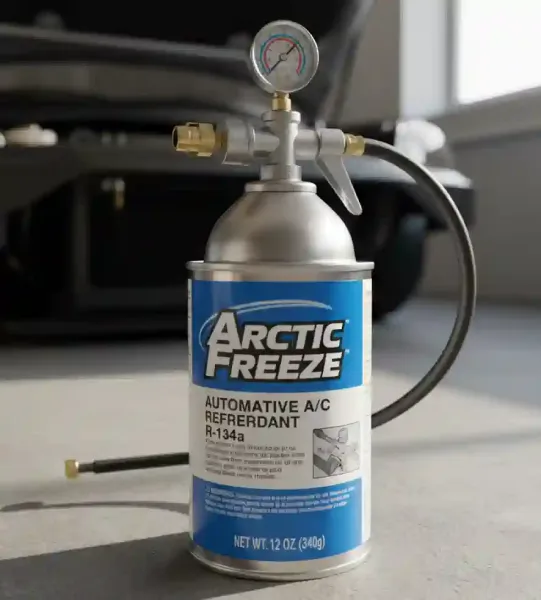
R-134a: The most common in vehicles manufactured from the mid-1990s to the 2010s.
-
R-1234yf: The most modern refrigerant, used in recent vehicles for being more eco-friendly and efficient.
⚙️ How Does the Gas Work Within the System?
The air conditioning gas is compressed, condensed, and expanded inside a closed circuit that includes components such as the compressor, condenser, expansion valve, and evaporator.
During this process, the gas changes state (from liquid to gas and vice versa), absorbing heat from the air and expelling it outside the vehicle.
In simple terms: the gas is the heart of the air conditioning system. Without it, the system would only blow air at room temperature.
🧊 Signs of Low Refrigerant Gas
Over time, the system may lose gas due to small leaks in the connections or hoses. Common signs of low gas include:
-
The air conditioner doesn’t cool as well as before.
-
The compressor turns on and off frequently.
-
There is fog or excessive humidity inside the car.
-
In severe cases, the compressor stops working to prevent damage.
🔍 How Often Should the Gas Be Recharged?
There’s no exact rule, as it depends on usage and system condition. However, as a reference:
-
Every 2 to 3 years is usually enough to maintain optimal performance.
-
If the system has never been checked and no longer cools, it’s best to perform a full inspection before recharging, since there could be leaks.
⚠️ The Importance of Doing It Correctly
Recharging gas without checking for leaks or using the wrong type of refrigerant can damage the compressor or valves. That’s why it’s always recommended to visit a specialized workshop, where diagnostic tools are used and the manufacturer’s specified gas type is followed.
Additionally, refrigerant gases must be handled carefully, as their release into the environment can be harmful.
💡 Tips to Take Care of Your Air Conditioning System
-
Use the A/C at least once a month, even in winter, to keep the compressor lubricated.
-
Replace the cabin filter every 10,000 to 15,000 km.
-
Clean the system if you notice unpleasant odors.
-
Avoid using DIY sealant products, as they can clog the system lines.