The Air Conditioning Filter
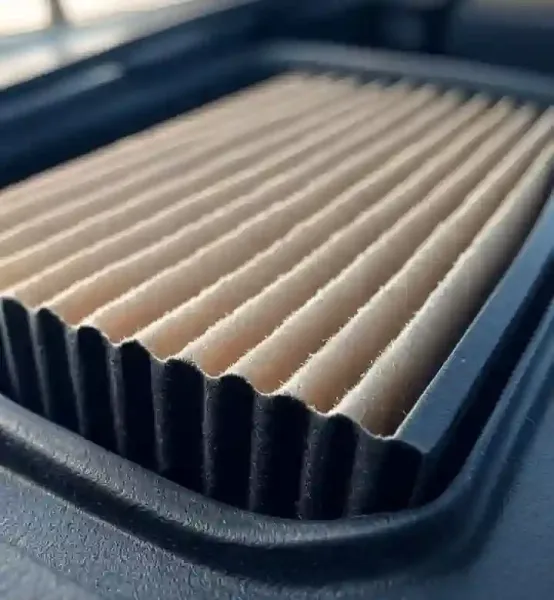
The air conditioning filter, also known as the cabin filter, is an essential component in modern vehicles. Although it often goes unnoticed, its role is crucial to ensure the quality of the air that passengers breathe inside the car.
Main Function
The air conditioning filter is responsible for trapping particles and contaminants that enter through the ventilation system. These include:
- Dust and pollen.
- Soot and atmospheric pollutants.
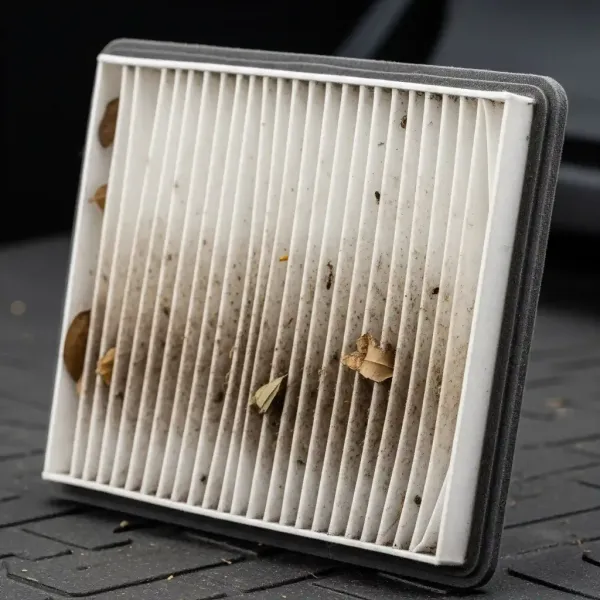
- Debris such as leaves, insects, and outside dirt.
- Allergens and, in some cases, harmful gases.
Thanks to this filter, the air entering the cabin is cleaner and healthier, improving comfort and protecting passenger health.
Types of Air Conditioning Filters
-
Standard (particle) filter:
Traps dust, pollen, and basic dirt. -
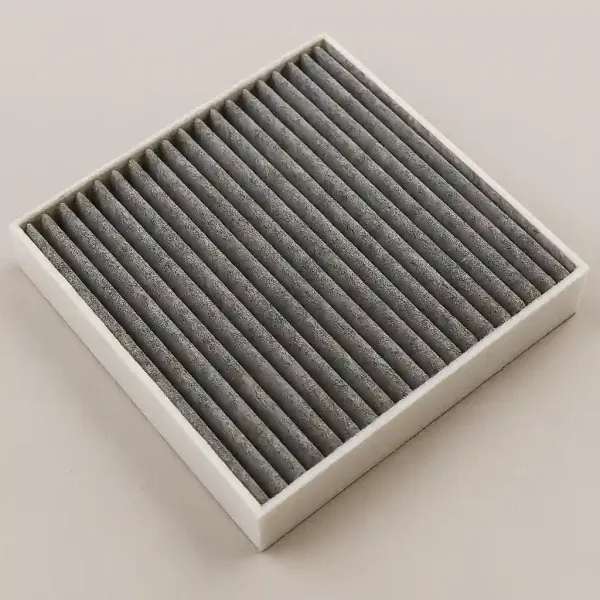
Activated carbon filter:
In addition to capturing solid particles, it neutralizes odors and filters gases such as ozone or nitrogen dioxide. -
High-efficiency filters:
Designed for people with allergies or special needs, they capture microscopic particles.
Consequences of Not Replacing It
A dirty or clogged filter can cause several issues:
- Reduced airflow in the climate control system.
- Extra strain on the blower motor, which may shorten its lifespan.
- Bad odors inside the cabin.
- Greater exposure to contaminants and allergens.
Maintenance and Replacement
- Most manufacturers recommend replacing it every 15,000 to 20,000 km or once a year, depending on driving conditions.
- In urban areas with high pollution or in very dusty climates, it may need more frequent replacement.
- Regular inspection is simple, and in many models, the driver can replace it without special tools.