Car Fuses
In automotive electricity, fuses are essential components that protect a vehicle’s electrical system. Though small and inexpensive, they serve a crucial function: preventing serious damage to circuits by interrupting the flow of current when an overload or short circuit occurs.
What Are Car Fuses?
Fuses are protective devices located in a car’s fuse box. They’re designed to “blow” or break when the electrical current exceeds a set limit, thereby protecting the vehicle’s wiring, electronic modules, and accessories.
In simple terms: they act as disposable safety switches.
How Do They Work?
Each fuse contains a metal filament calibrated to withstand a specific amount of amperage.
- If the current stays within the normal range, the fuse allows electricity to flow without issue.
- If a short circuit or overload occurs, the current exceeds the limit and the filament melts, cutting off the electrical flow.
This prevents excess energy from burning wires, damaging the ECU, or even causing fires.
Types of Automotive Fuses
Modern cars use several types of fuses:
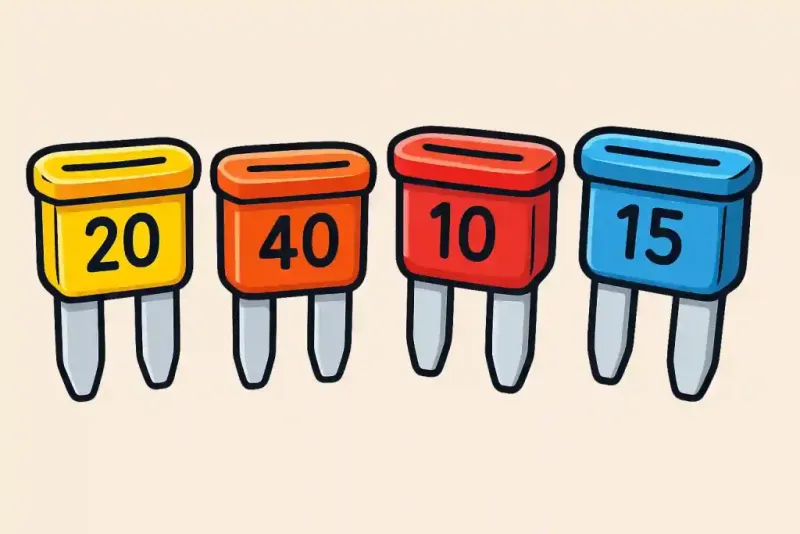
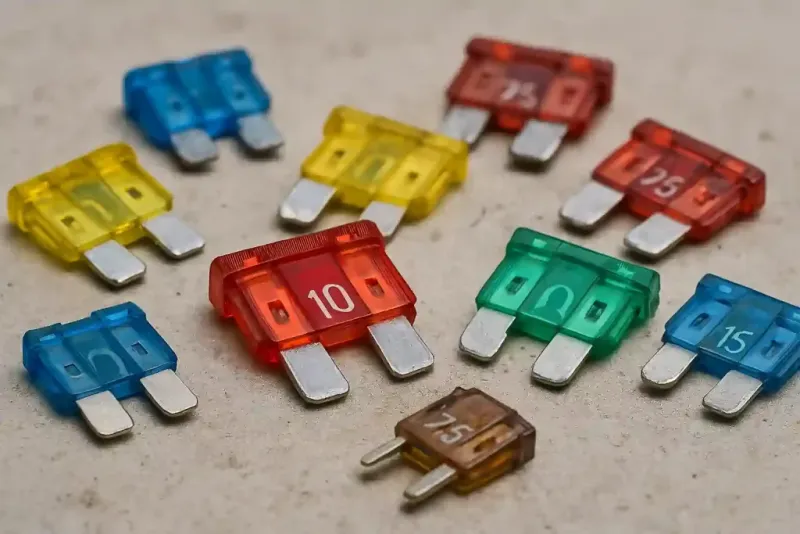
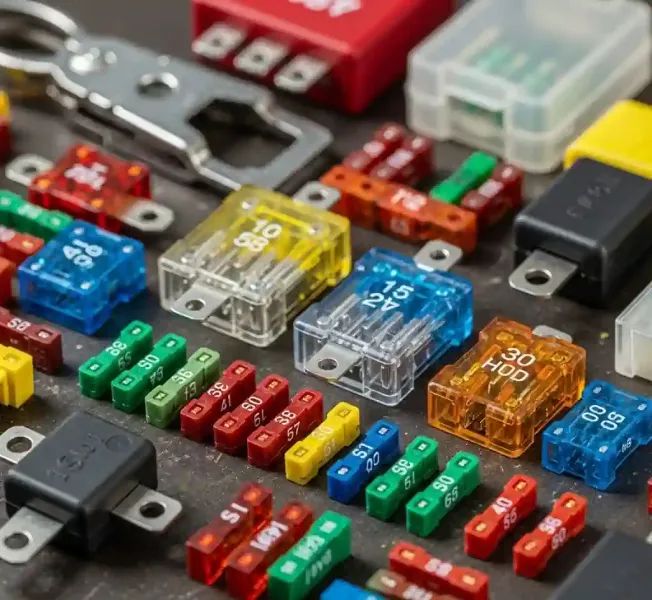
- Blade fuses: The most common type, color-coded to indicate amperage rating (5A, 10A, 15A, 20A, etc.).
- Mini and micro fuses: Smaller versions used in vehicles with more electrical components.
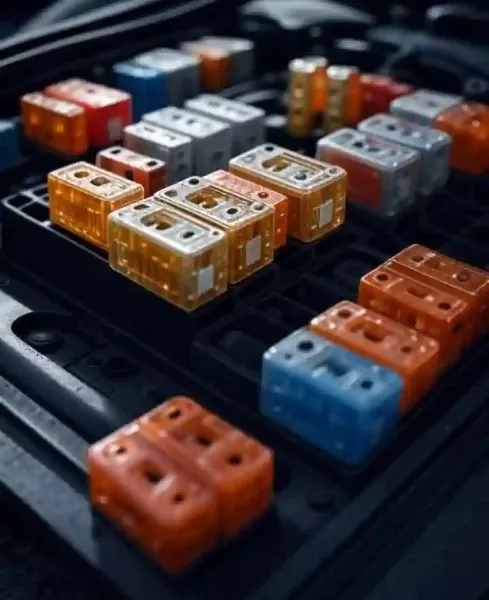
- Maxi fuses: Larger fuses used in systems that require high current, such as fans, heating, or powerful audio systems.
- Glass or cylindrical fuses: Older style, still found in some classic cars.
Symptoms of a Blown Fuse
A blown fuse results in the failure of the electrical system it protects. Common symptoms include:
- Radio, interior lights, or cigarette lighter not working.
- Fan or air conditioning not operating.
- Exterior lights out on one side of the vehicle.
- Malfunctions in modern electronic systems (screen, sensors, charging ports).
How to Identify a Blown Fuse
Most modern fuses have translucent plastic, allowing you to see if the internal filament is broken. You can also check with a multimeter by measuring continuity.
Replacing Fuses
Replacing a fuse is simple but requires care:
- Locate the fuse box (usually under the steering wheel, on the dashboard, or in the engine compartment).
- Identify the blown fuse using the vehicle’s diagram.
- Replace it with one of the same amperage rating.
- Never use a fuse with a higher amperage, as it compromises circuit protection.