The Intake Manifold
The intake manifold is one of the fundamental components in the air supply system of an internal combustion engine. Although it often goes unnoticed, it plays a crucial role in the vehicle’s performance, efficiency, and durability. Its design and proper functioning directly influence power and fuel consumption.
What is the intake manifold?
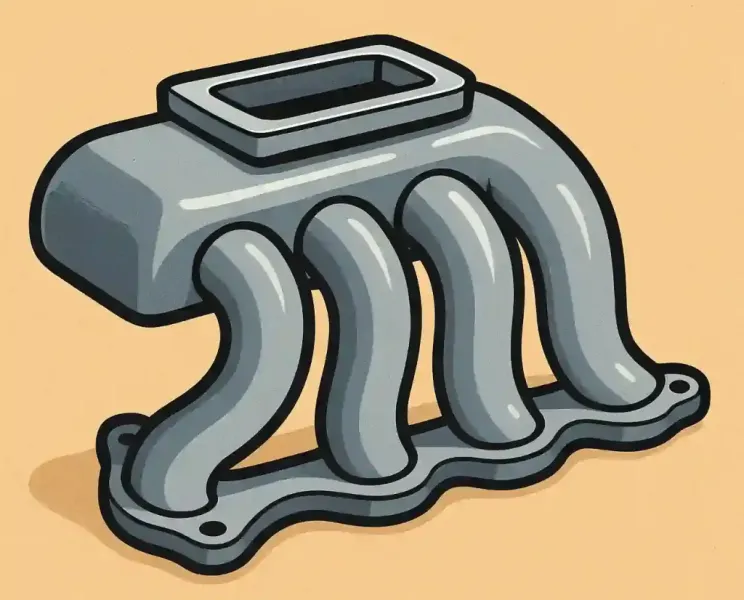
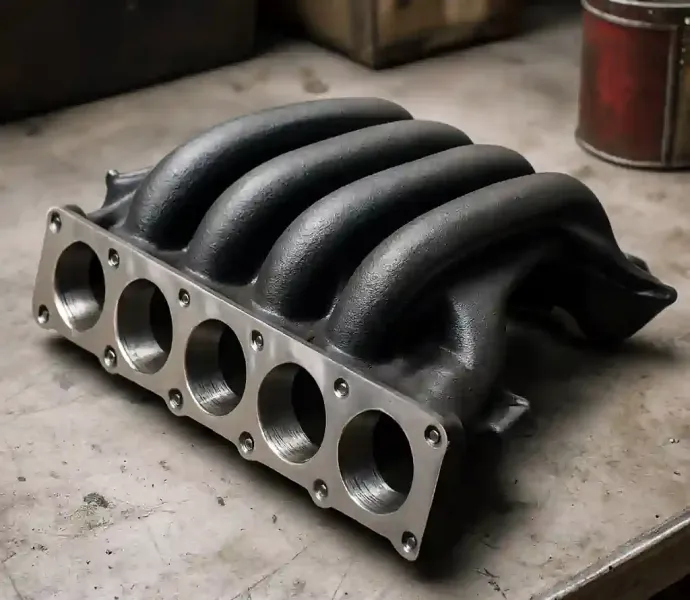
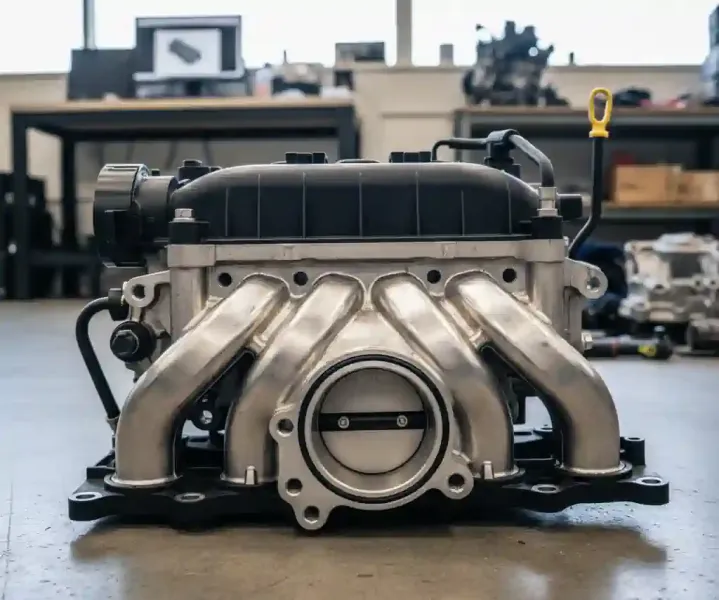
The intake manifold is a set of metal or plastic ducts responsible for distributing air (or the air-fuel mixture, in some older engines) to each of the cylinders. It is located at the top or side of the engine, connected to the throttle body or carburetor at one end, and to the cylinder heads at the other.
Main functions
-
Uniform air distribution: Ensures all cylinders receive the same amount of air, preventing differences that would affect engine balance.
-
Combustion optimization: A homogeneous mixture of air and fuel allows for more complete and efficient combustion.
-
Performance improvement: Modern manifold designs take advantage of airflow dynamics to increase power across different RPM ranges.
-
Emission reduction: By improving combustion, it helps the engine release fewer pollutants.
Materials and design
-
Aluminum: Common in high-performance engines due to its strength and light weight.
-
Reinforced plastic: Used in many modern cars for being more cost-effective and improving flow thanks to smoother internal surfaces.
In addition, some modern manifolds incorporate variable geometry valves, which modify the length of the intake runners depending on engine speed, thereby maximizing efficiency at both low and high RPMs.
Symptoms of intake manifold failure
A defective intake manifold can cause several issues, including:
-
Power loss or acceleration problems.
-
Excessive fuel consumption.
-
Whistling noises or air leaks.
-
Rough idling or engine “jerking.”
-
Error codes in the OBDII system related to lean or rich mixtures.
Importance of maintenance
Although the intake manifold does not require frequent maintenance, it is important to:
-
Check seals and gaskets to avoid vacuum leaks.
-
Keep the throttle body and ducts clean to prevent carbon buildup.
-
Address coolant leaks, in cases where the manifold includes liquid passages for temperature control.
Conclusion
The intake manifold is much more than just a set of tubes: it is a precisely designed component that ensures the engine breathes efficiently. Its proper operation provides a balance between power, fuel consumption, and emissions—key factors in the performance of any modern vehicle.