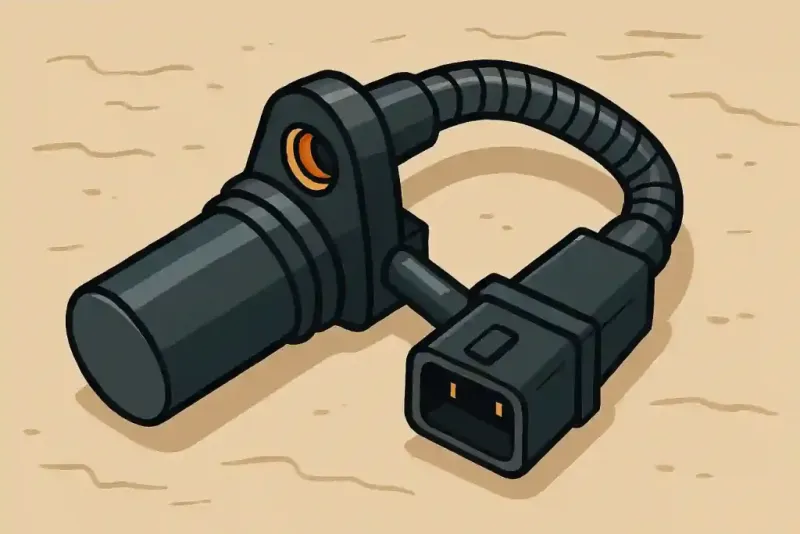
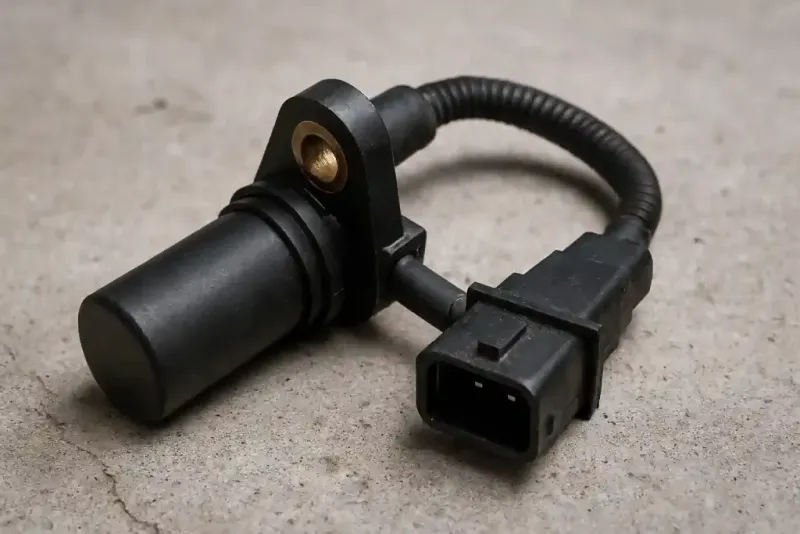
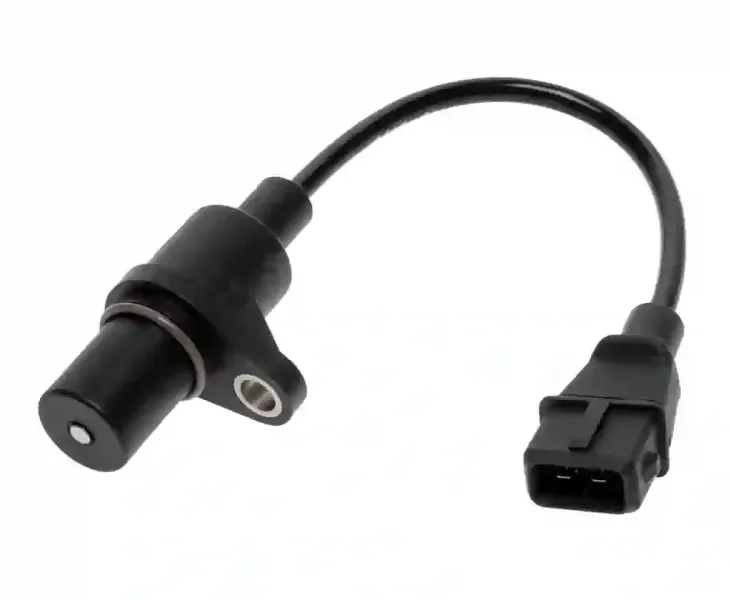
Crankshaft Sensor
In the automotive world, the crankshaft sensor is one of those components that, although small and seemingly simple, plays a fundamental role in engine operation. Its proper performance ensures that combustion occurs precisely and efficiently, preventing failures that could render the vehicle inoperable.
What Is the Crankshaft Sensor?
The crankshaft sensor, also known as the crankshaft position sensor (CKP), is an electronic component responsible for detecting the position and rotational speed of the crankshaft. This data is sent to the engine control unit (ECU), which uses it to regulate critical parameters such as fuel injection and ignition timing.
In simple terms: this sensor tells the vehicle’s computer where the pistons are and how fast the engine is turning.
How Does It Work?
The operation of the crankshaft sensor depends on its type, but generally it’s based on detecting a toothed wheel (tone wheel) attached to the crankshaft.
- The crankshaft rotates and moves this toothed wheel.
- The sensor “reads” the passing teeth or slots on the wheel.
- Each signal generated is sent to the ECU.
- The ECU processes the data to synchronize spark timing and fuel injection.
Main Types of Crankshaft Sensors
- Inductive sensor: uses a magnet and coil to generate a variable voltage signal when a metal tooth passes by.
- Hall effect sensor: detects changes in a magnetic field and produces a more precise digital signal.
- Optical sensor: uses a light beam and a slotted wheel to read position (less common in modern vehicles).
Importance of the Crankshaft Sensor
A properly functioning crankshaft sensor ensures:
- Engine start-up: without the sensor’s signal, the ECU doesn’t know piston position, so the engine won’t start.
- Combustion efficiency: allows precise timing of fuel injection and spark.
- Emission control: helps reduce pollution by maintaining efficient combustion.
- Safety and reliability: prevents jerking, unexpected shutdowns, or power loss.
Symptoms of a Faulty Crankshaft Sensor
When this sensor begins to fail, the vehicle may experience:
- Difficulty starting or inability to start.
- Power loss during acceleration.
- Sudden engine shutdowns while driving.
- Increased fuel consumption.
- Illumination of the “Check Engine” warning light.