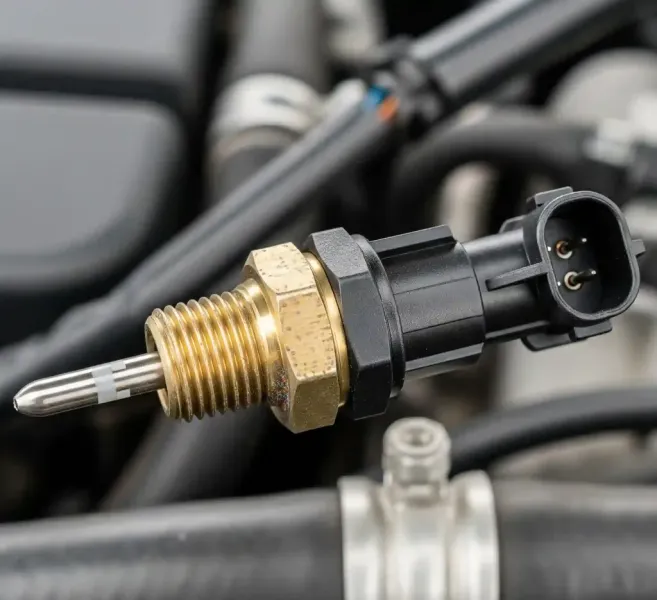
Temperature Sensor
The engine temperature sensor, also known as the ECT sensor (Engine Coolant Temperature), is a critical component in the thermal management system of any modern vehicle. Though modest in size, its function is vital: it monitors coolant temperature and sends that information to the electronic control unit (ECU), allowing the engine’s behavior to be adjusted in real time.
🔍 How Does It Work?
The ECT sensor is a thermistor—a type of electrical resistor that varies with temperature.
- When cold, its resistance is high (2,000–3,000 Ω at 20 °C).
- As the engine warms up, resistance drops (200–300 Ω at 90 °C).
The ECU interprets this change as a voltage signal, typically ranging from 2V (cold engine) to 0.5V (hot engine). This signal enables the vehicle’s computer to make decisions such as:
- Activating the cooling fan.
- Adjusting the air-fuel mixture.
- Modifying ignition timing.
- Triggering dashboard alerts if overheating is detected.
⚠️ Common Failures
A faulty sensor can cause several issues:
- Difficulty starting when cold.
- Excessively rich fuel mixture.
- Overheating due to fan not activating.
- Incorrect readings that don’t trigger fault codes, complicating diagnosis.
🛠️ Diagnosis and Replacement
To check its function:
- Locate the sensor near the thermostat or on the engine block.
- Use a multimeter to measure voltage across the terminals.
- Compare the reading to the actual coolant temperature.
- If the voltage doesn’t match expected values, the sensor should be replaced.
Replacement is straightforward and can be done at home, provided proper precautions are taken to avoid coolant leaks.
🧠 Why Is It So Important?
The temperature sensor not only protects the engine from overheating—it also optimizes performance, reduces emissions, and improves fuel efficiency. In more advanced systems, it even contributes to exhaust gas recirculation management and cold-start strategies.